


TLDR
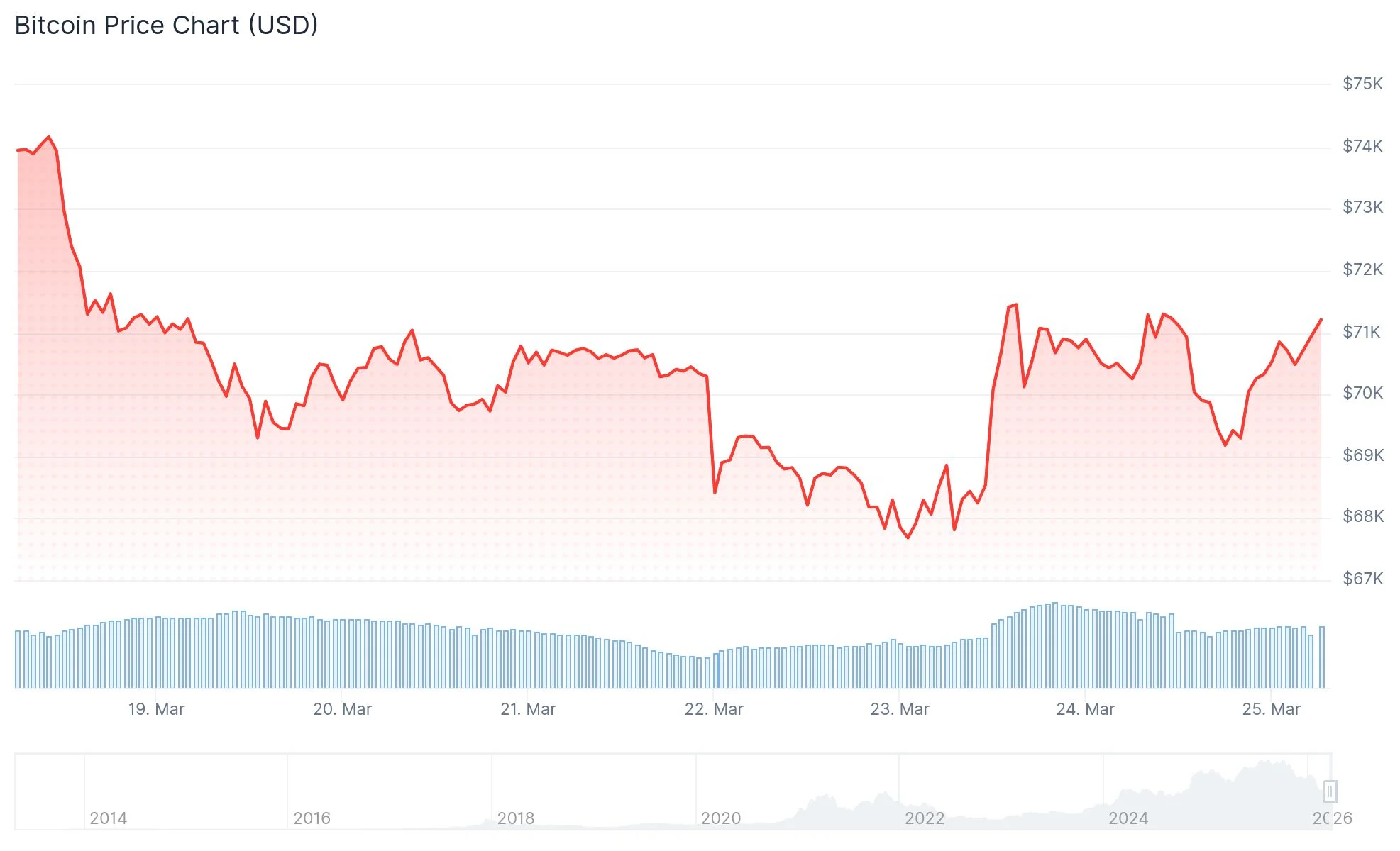
- BTC declined 0.4% to approximately $70,475 on Tuesday amid contradictory ceasefire reports from the U.S. and Iran.
- Investment firm Bernstein declares Bitcoin has reached its bottom, characterizing recent declines as sentiment-driven rather than fundamental.
- Crude oil prices exceeding $85–$90 trigger inflation concerns, prompting investors to shift toward cash and away from riskier assets.
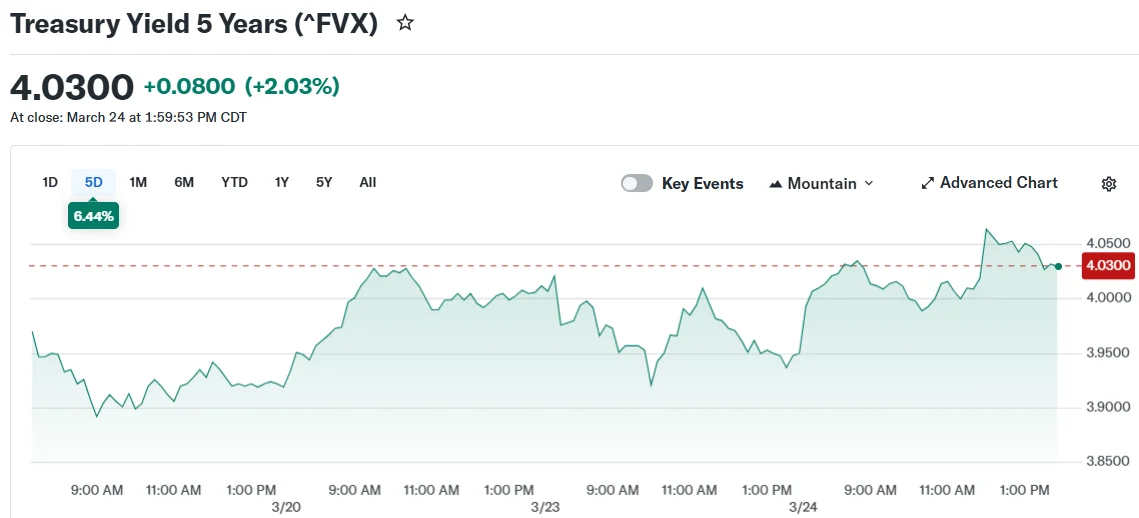
- The U.S. 5-year Treasury yield reached a 9-month peak of 4.10%, while July rate hike probability climbed to 20.5%.
- Bernstein reports Bitcoin has delivered 25% better returns than gold since Iran tensions escalated in late February.
Bitcoin experienced a modest 0.4% decline on Tuesday, settling around $70,475 after surrendering gains from the prior trading session. The cryptocurrency’s movement reflected market confusion surrounding uncertain reports about potential diplomatic progress between the United States and Iran.
Israeli media outlet Channel 12 claimed that U.S. envoys Steve Witkoff and Jared Kushner were orchestrating a ceasefire agreement featuring a comprehensive 15-point framework. Separately, The New York Times indicated that Washington had transmitted a formal diplomatic proposal to Tehran.
However, Iran’s parliamentary leadership swiftly refuted these claims, dismissing the reports as misinformation and stating no negotiations were underway. This conflicting information kept financial markets in a state of flux, with traders reacting to unverified headlines rather than concrete developments.
[[EMBED_0]]
President Trump announced Monday that he was postponing military strikes on Iranian energy facilities for a five-day period following what he characterized as “very good and productive” diplomatic exchanges. Despite this announcement, crude oil prices surged sharply on Tuesday as geopolitical uncertainty persisted.
Macroeconomic Headwinds Create Challenges for Bitcoin
Crude oil prices breaching the $90 threshold have intensified inflation worries across markets. Bond market indicators reveal that the probability of a Federal Reserve interest rate increase by July has skyrocketed from zero to 20.5% within a single week.
The U.S. 5-year Treasury yield advanced to 4.10%, marking its highest level in nine months. Meanwhile, the S&P 500 index plunged to its weakest position in more than six months during Monday’s session, as market participants aggressively repositioned into cash holdings.
Prominent technology companies such as Google, Meta, and IBM have suffered losses exceeding 10% during the past six weeks. Compounding economic anxieties, the U.S. national debt surpassed $39 trillion, intensifying concerns about rising consumer expenses.
Arthur Azizov, founder at B2 Ventures, observed: “There is a growing sense in the market that traditional assets are becoming more speculative than crypto, which is not a positive signal.”
Bernstein Analysts Declare Bitcoin Bottom Established
In contrast to prevailing market pessimism, Bernstein analysts have declared their conviction that Bitcoin has established its price floor. Research director Gautam Chhugani and his team stated: “We believe Bitcoin has found its trough and is now heading higher.”
The investment firm characterized the recent price weakness as a sentiment-driven correction rather than evidence of deteriorating fundamentals. Additionally, their analysis highlighted that Bitcoin has delivered returns 25 percentage points superior to gold since Middle Eastern tensions intensified in late February.
Bernstein continues to maintain an outperform rating on Strategy with a $450 price objective. The company, under Michael Saylor’s leadership, controls approximately 3.6% of Bitcoin’s total circulating supply, representing holdings worth roughly $53.5 billion.
On prediction market platform Polymarket, participants are predominantly wagering that the conflict will conclude before June 2026.
[[EMBED_1]]
Bitcoin tested the $67,500 support zone on Monday. Market technicians suggest the $66,000 threshold represents a critical level to monitor should inflation anxieties and interest rate concerns persist.
