

Key Highlights
- SpaceX’s upcoming IPO could generate up to $75 billion, positioning it as history’s largest public offering
- Elon Musk’s aerospace firm utilized confidential SEC filing procedures initially designed for emerging growth companies
- A recent Nasdaq policy update permits rapid Nasdaq-100 index entry within 15 trading sessions post-listing
- The public float will represent merely 3-4% of total equity, creating an unusually thin trading volume for a major corporation
- Financial analysts at Morningstar highlight potential 20-30% volatility driven by Musk-related news and governance events
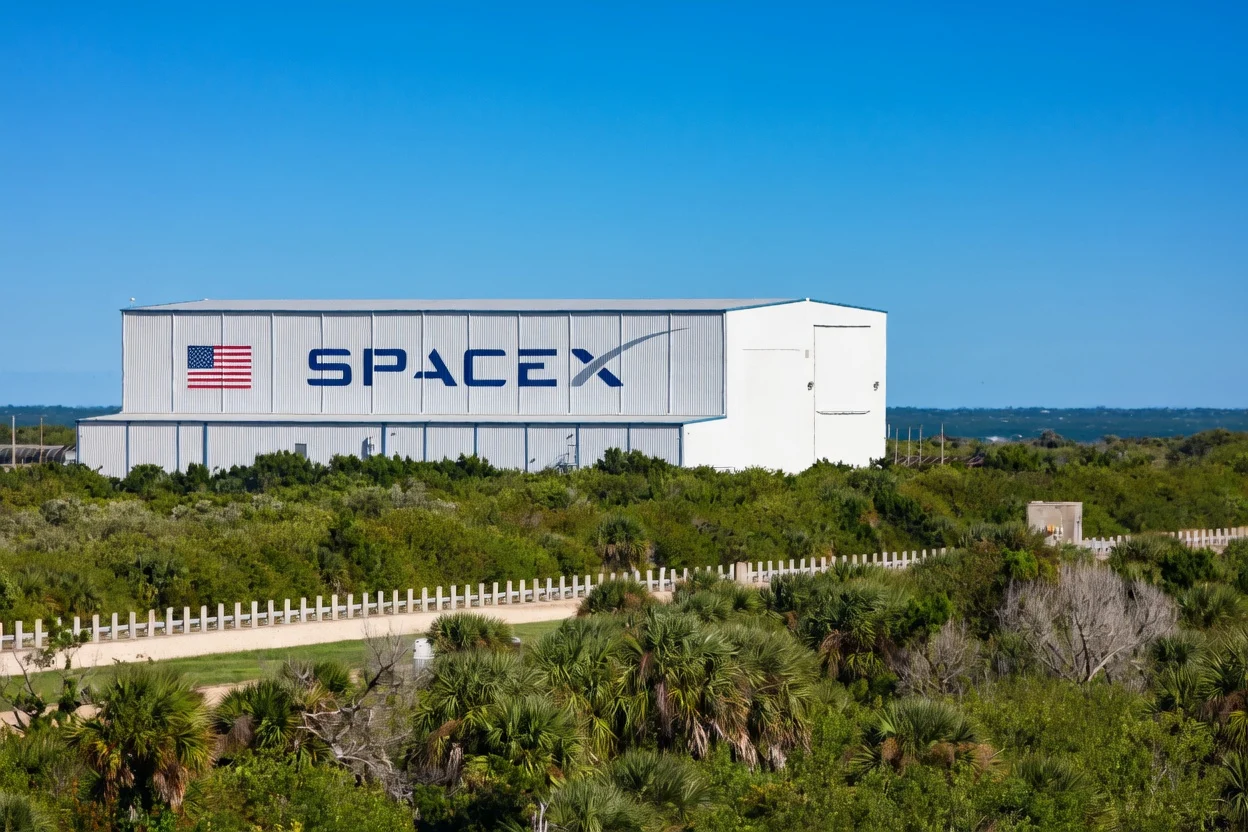
Elon Musk’s SpaceX stands on the brink of executing what may become the most substantial initial public offering ever recorded. The aerospace manufacturer and launch services provider is positioning itself to secure as much as $75 billion through its market debut, substantially surpassing Saudi Aramco’s $30 billion offering from 2019.
🚀 HUGE: Elon Musk's SpaceX is reportedly nearing an IPO filing, potentially raising $50B and valuing the company at $1.75T, the largest IPO in history.
Details:
– Filing of prospectus for an IPO this week, BBG reports
– Raise target: $75B+ (prev. est. was $50B)
– Would 2.5x… pic.twitter.com/TXK1lNutdE— Coin Bureau (@coinbureau) March 25, 2026
The rocket manufacturer has submitted, or is in the process of submitting, confidential registration materials to the Securities and Exchange Commission. This streamlined approach emerged from the 2012 Jumpstart Our Business Startups (JOBS) Act, originally conceived to ease the path to public markets for smaller enterprises. A 2017 amendment broadened its application, enabling major corporations such as Uber and Airbnb to leverage the same mechanism.
Confidential filing protocols permit SpaceX and regulatory authorities to examine registration materials behind closed doors before public disclosure. This framework shields proprietary financial data and strategic information from competitors during preliminary review stages.
Financial projections for SpaceX appear remarkably robust. Industry observers anticipate Ebitda profit margins potentially reaching 50%, significantly outpacing the aerospace sector’s S&P 500 average of approximately 20%.
Exchange Policy Modification Creates Accelerated Pathway
On March 30, Nasdaq officially announced that beginning May 1, newly public large-capitalization companies will qualify for Nasdaq-100 index membership as soon as 15 trading days following their debut. The previous framework required companies to remain public for up to twelve months before consideration.
Reports suggest this regulatory adjustment materialized after SpaceX financial advisers contacted Nasdaq officials and competing index administrators earlier this year seeking expedited inclusion mechanisms. Rapid integration into prominent market indexes would activate substantial automated purchasing from passive investment vehicles, immediately enhancing trading depth and providing liquidity for initial stakeholders.
Prediction marketplace Kalshi currently assigns an 81% probability to a SpaceX public offering occurring before August 1.
Musk has publicly committed to reserving up to 30% of IPO shares for individual retail participants. Financial services giant Morgan Stanley, through its E*Trade platform, is reportedly negotiating to manage the retail distribution component. Competing platforms including Robinhood and SoFi appear unlikely to participate.
Volatility Considerations Tied to Musk
Morningstar equity analyst Franco Granda identified the “Musk Effect” as a substantial consideration for prospective shareholders. His research examined Tesla’s trading patterns, where corporate governance controversies and political activities involving Musk generated average price movements approaching 12%.
For SpaceX, given the exceptionally limited 3-4% public float, comparable catalysts could trigger more pronounced reactions. Both Morningstar and PitchBook project potential price fluctuations of 20-30% responding to similar headline events.
Granda’s assessment acknowledges that SpaceX leadership consistently achieves ambitious technical objectives, though timeline adherence proves challenging. Historical data indicates approximately 20% of initiatives meet original deadlines, while remaining projects experience delays spanning two to three years.
The company is actively marketing space-based artificial intelligence infrastructure as a fundamental growth pillar. Musk maintains that solar-powered orbital computing facilities will achieve cost advantages over terrestrial data centers within several years.
Once the S-1 registration statement becomes publicly accessible, investors will gain unprecedented visibility into the financial operations of an organization responsible for executing more than half of all orbital launches globally.
