

Key Highlights
- Aviation sector equities plummeted following President Trump’s address indicating the Iran conflict may persist longer than Wall Street anticipated.
- Aviation fuel costs have skyrocketed approximately 70% since the commencement of the U.S. and Israel-led military operations against Iran.
- United Airlines (UAL) and Southwest (LUV) ranked among the S&P 500’s poorest performers.
- TD Cowen slashed valuation targets throughout the airline industry, pointing to elevated fuel expenses and weakening passenger demand.
- TD Cowen reduced UAL’s price objective to $120 (previously $140) and LUV’s target to $46 (down from $56), while maintaining Buy recommendations on both carriers.
The airline industry experienced significant selling pressure Thursday following President Trump’s recent statements regarding the Iran military campaign, which extinguished investor hopes for a rapid conflict resolution. Financial markets had been anticipating a swift conclusion to hostilities — along with the corresponding decline in fuel expenses. Those expectations quickly dissipated.
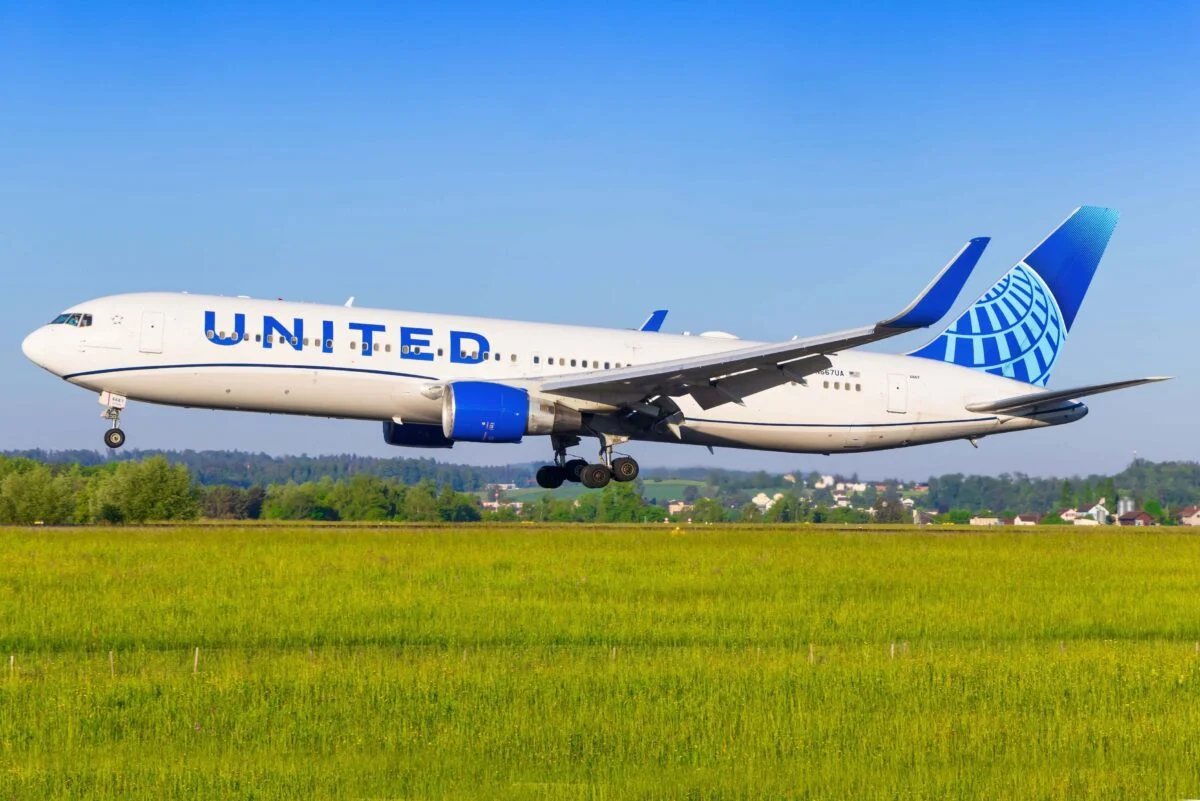
United Airlines (UAL) shares retreated 3.2% while Southwest Airlines (LUV) declined 2.3%, positioning both carriers among the S&P 500’s weakest performers, even as the broader index fell a modest 0.2%.
United Airlines Holdings, Inc., UAL
Delta Air Lines (DAL) slid 1.4%, JetBlue (JBLU) fell 1.8%, and American Airlines dropped 3.8%. The U.S. Global JETS ETF declined 2%.
During Wednesday’s address, Trump declared the Iran war is “nearing completion” while emphasizing that “we must honor the dead by completing the mission.” Investors interpreted the subtext: a quick conclusion to the conflict remains unlikely.
Aviation fuel costs have climbed roughly 70% since military operations involving the U.S. and Israel against Iran commenced. The U.S. Gulf Coast Kerosene-Type Jet Fuel Spot price reached $4.344 per gallon on March 20 — marking the highest level observed since May 2022. Prior to the conflict’s February 27 start date, the price stood at $2.428 per gallon.
Such dramatic price increases create severe profitability challenges for airline operators.
TD Cowen Reduces Valuation Forecasts Industry-Wide
TD Cowen’s Tom Fitzgerald, an analyst covering the sector, reduced price objectives throughout the airline group Thursday. He cited expectations for sustained elevated energy costs and deteriorating credit card transaction data as justification for tempering forecasts.
“We lower our estimates for the big 6 U.S. airlines with fuel looking likely to remain elevated vs. antebellum prices for the remainder of 2026,” Fitzgerald stated.
TD Cowen trimmed its United Airlines valuation to $120 from $140, while preserving its Buy stance. The investment firm characterizes Delta as the most defensive position currently, though still considers United the most compelling long-term investment.
Regarding Southwest, TD Cowen decreased its price target to $46 from $56, likewise retaining a Buy rating. The firm acknowledged its Southwest revenue projections now trail broader Wall Street consensus entering Q1 earnings.
Fitzgerald highlighted that carriers with “higher leverage levels and/or greater fuel sensitivity” confront the most challenging near-term environment. He explicitly identified American Airlines, JetBlue, and Alaska Air Group as having the greatest exposure.
Southwest Faces Headwinds as Projections Trail Market Expectations
Southwest approaches earnings season from a precarious position. TD Cowen’s below-consensus forecasts, paired with weakening demand indicators and escalating operational costs, establish diminished expectations — though not without risk.
Southwest has declined 7.1% year-to-date, with average daily share volume exceeding 10 million. The carrier’s market capitalization stands at $18.78 billion.
Notwithstanding the target reductions, TD Cowen preserved Buy ratings on both UAL and LUV, indicating the current weakness is perceived as cyclical versus fundamental. Fitzgerald observed that “further volatility” might generate “attractive buying opportunities” for United investors.
The U.S. Gulf Coast jet fuel spot price continues hovering near multi-year peaks as the airline sector approaches Q1 earnings season.
