


Key Takeaways
- BTC remains confined within a $60,000 to $73,000 range, with $60K representing critical support
- Options positioning creates a “negative gamma” trap below $68,000 that may amplify downward moves
- Technical analyst Aksel Kibar warns of a possible slide to $52,500 if support levels fail
- Wednesday witnessed $174 million in outflows from Bitcoin ETFs
- Whale activity shows net selling, with apparent demand registering negative 63,000 BTC
Bitcoin continues to consolidate within a constrained $60,000 to $73,000 corridor, yet underlying market mechanics suggest growing vulnerability. The leading digital asset by capitalization tumbled as much as 3.6% to touch $65,709 during Thursday’s session before staging a modest rebound.
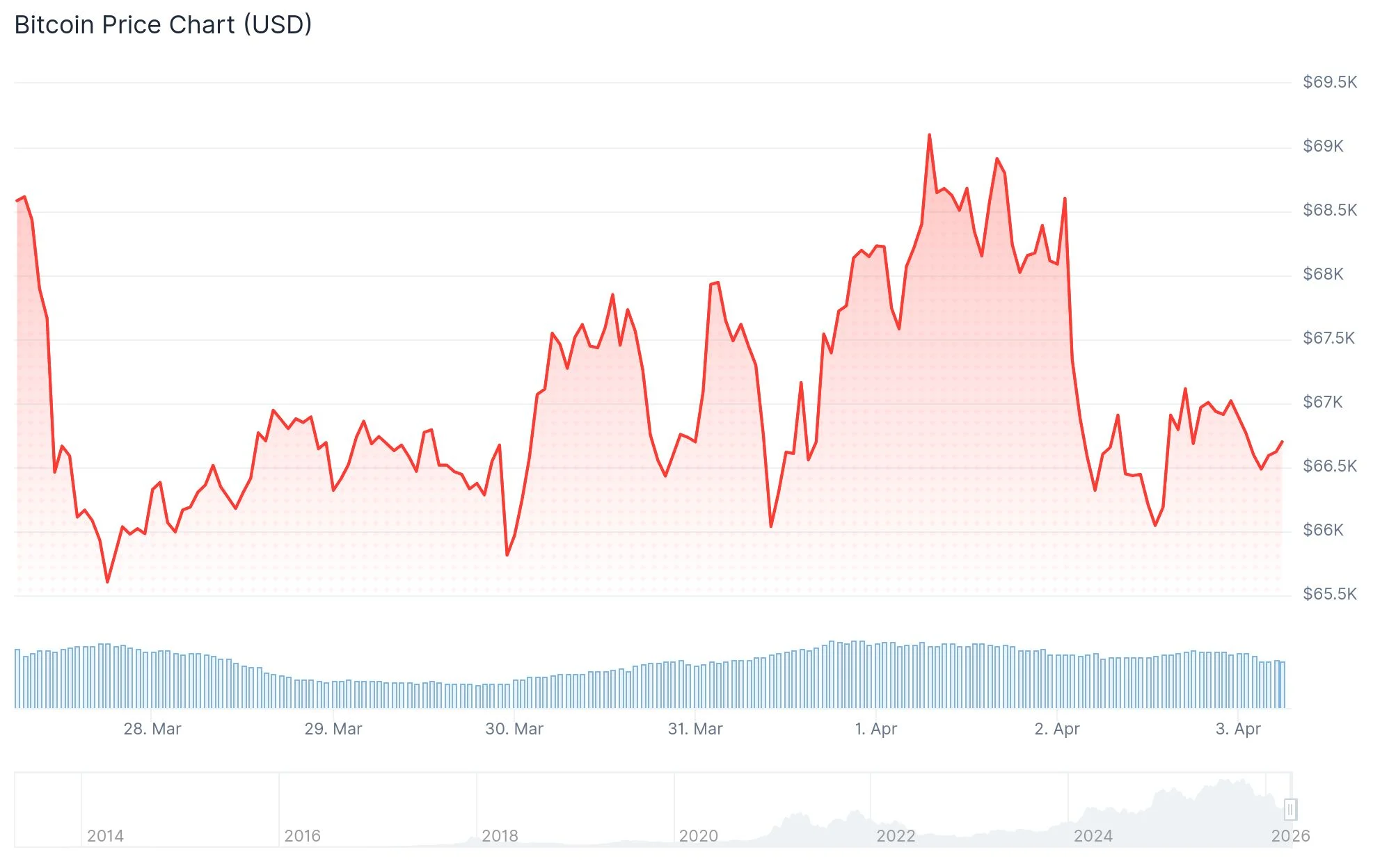
Geopolitical tensions resurfaced as President Trump escalated rhetoric against Iran, sending shockwaves through commodity markets with WTI crude jumping above $111 per barrel. Bitcoin responded with a roughly 2% decline over the past day, trading near the $67,000 mark.
According to Alex Kuptsikevich, FxPro’s chief market analyst: “Trump’s recent Iran war remarks sparked aggressive selling in an environment lacking de-escalation signals,” while pointing out Bitcoin’s current consolidation between $66,000 and $69,000.
Caroline Mauron, Orbit Markets co-founder, observed: “Bitcoin continues tracking equity movements, although recent weeks have demonstrated diminished responsiveness to both positive and negative catalysts.”
Understanding the Negative Gamma Threat
Derivatives analytics from Deribit and Glassnode reveal substantial put option accumulation spanning from $68,000 down to the mid-$50,000 range. This configuration establishes what derivatives traders identify as a “negative gamma” environment.

The mechanism works as follows: when Bitcoin breaches $68,000 to the downside, options dealers must liquidate BTC holdings to maintain delta-neutral positions. These forced sales depress prices further, which necessitates additional hedging sales — creating a self-reinforcing downward spiral.
Glassnode’s latest weekly analysis warns: “Entry into this zone risks triggering accelerated liquidations as hedging dynamics amplify bearish momentum, transforming an otherwise measured decline into aggressive repricing, potentially retesting $60K support.”
Market depth remains shallow following the March 27 derivatives expiration, and with Easter holidays approaching, bid-side liquidity may prove insufficient to counteract intensified selling pressure.
Technical Forecast Points to $52,500
Chartered market technician Aksel Kibar has detected a bearish rising wedge formation on Bitcoin’s price chart. His assessment: “A breach of the wedge’s lower trendline would confirm a potential move targeting $52,500.”
Stick to your discipline. https://t.co/dOu8aYYdLp pic.twitter.com/He1v0vQrJS
— Aksel Kibar, CMT (@TechCharts) April 2, 2026
Bitcoin’s aggregate open interest languishes below the $20 billion threshold, a level last observed in early February when BTC was changing hands around $79,000. Hyblock’s liquidation heatmap indicates concentrated long exposure vulnerable to stops between $63,000 and $65,000.
Demand indicators paint an equally concerning picture. CryptoQuant data reveals apparent demand registered negative 63,000 tokens as of late March. Major holders have shifted to net distribution mode throughout the previous twelve months.
Jasper De Maere, Wintermute trader, provided a blunt assessment: “Onchain metrics validate what price behavior has been signaling: conviction is completely absent.”
U.S.-listed spot Bitcoin ETFs documented $174 million in net redemptions on Wednesday. While March produced approximately $1.1 billion in aggregate inflows, these capital flows remain highly susceptible to macroeconomic volatility.
Bitcoin has surrendered 45% of its value from the October high of $126,000.
