


Key Takeaways
- Binance Coin declined more than 5% during the session, breaking through the crucial $600 threshold
- Crude oil prices jumped beyond $110 per barrel amid escalating Middle East conflict, creating pressure across digital asset markets
- Technical indicators show three successive bearish signals on the 4-hour timeframe, indicating institutional distribution
- A further decline toward the $520 price level remains probable if selling pressure persists
- Daily Relative Strength Index has dropped beneath the 40 mark, reinforcing bearish market sentiment
Binance Coin has experienced a sharp decline exceeding 5% during a single trading session, breaking through the psychologically significant $600 threshold that market participants had been monitoring. The digital asset momentarily reached $580 before stabilizing at temporary support.
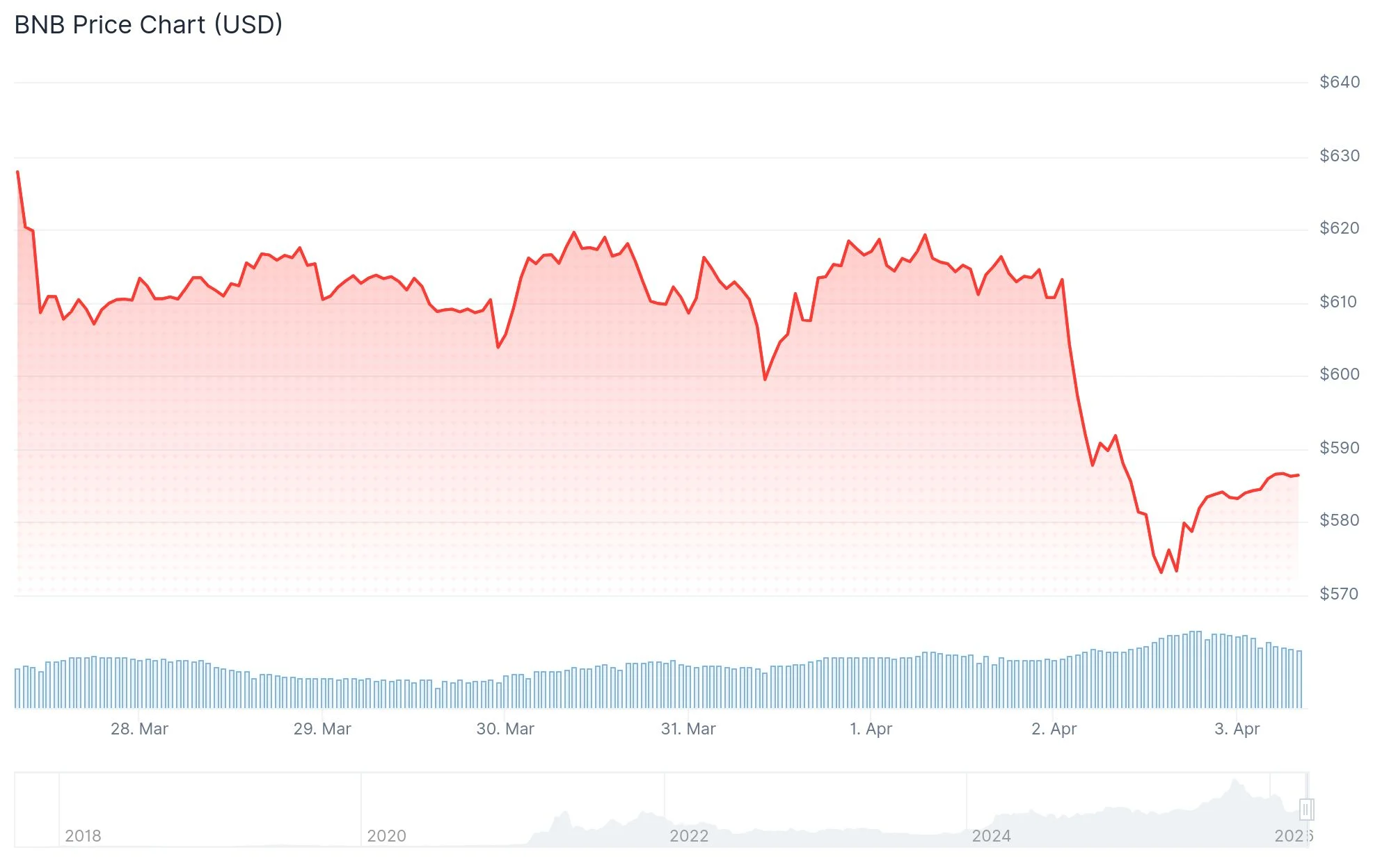
The dramatic price decline coincides with crude oil markets surging above the $110 per barrel mark. President Trump issued warnings regarding potential military intervention against Iran concerning access through the Strait of Hormuz, triggering anxiety throughout global financial markets and prompting capital flight from higher-risk assets including cryptocurrencies.
Trading activity for Binance Coin increased by 35% over the last 24-hour period as the price approached and tested the $580 demand region.
Currently trading at $580, BNB has retreated 57% from its recent peak of $1,360. This substantial distance highlights the intensity of selling pressure accumulated throughout recent months.
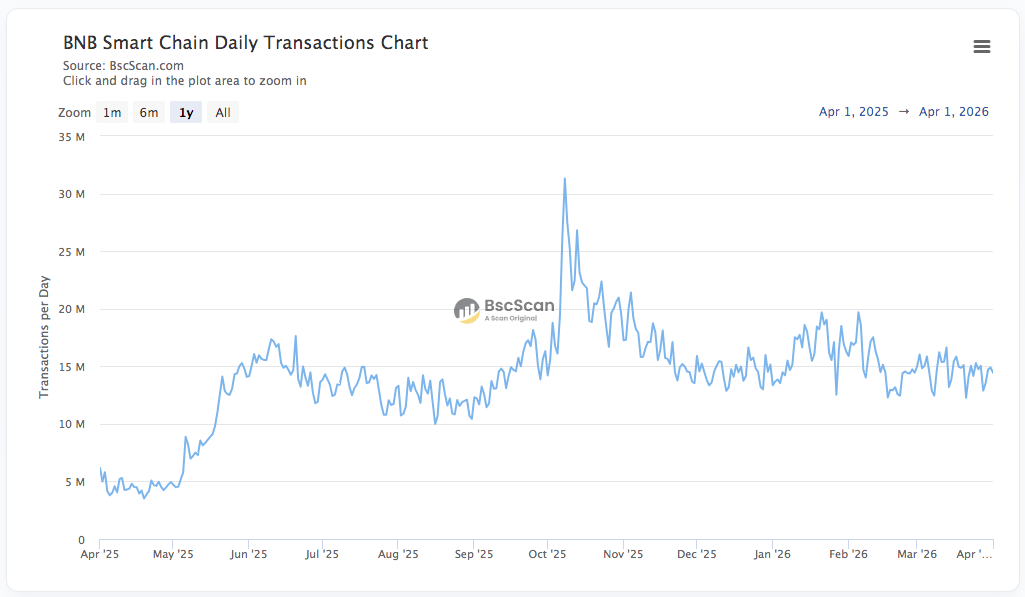
Binance Coin serves dual primary functions: providing fee reductions on the Binance exchange platform and facilitating transaction fees across the BNB Chain network. Blockchain analytics from BSC Scan indicate daily transaction volumes fluctuating between 13 and 19 million, consistent with typical network activity.
Bearish Momentum Dominates
The daily price chart reveals that BNB has revisited the $580 support level for the third occurrence within a two-month period. Multiple tests of identical support zones typically diminish the likelihood of an immediate price recovery.
The Relative Strength Index measured on the daily timeframe has fallen beneath 40, a threshold that technical analysts commonly interpret as bearish confirmation.
Federal Reserve monetary policy expectations are contributing additional downward pressure. Market participants have eliminated expectations for interest rate reductions throughout 2026. Just thirty days prior, approximately 47% of analysts anticipated a potential rate cut during June.
Sequential Bearish Signals Since Mid-March
Analyzing the 4-hour chart reveals three consecutive bearish signals emerging since March 18. The most recent signal materialized following the conclusion of American market hours on April 2.
These technical patterns suggest coordinated institutional selling activity. The 4-hour Relative Strength Index has entered oversold conditions, potentially setting the stage for a temporary rebound.
Any resulting bounce might present short-position traders with improved entry opportunities ahead of a possible descent toward the $520 level.
$BNB Drops Below $570 For The First Time In Over A Year….
I'm Expecting A Strong Bounce From The 0.5 Fib Or 0.618 Fib Level.
Best Accumulation Zone: $400 – $500 (0.5-0.618 FIB Level)
Looking At Historical Fractals & Chart Structures, The Question Is Simple:
Can #BNB Join The… pic.twitter.com/BP0yTZyxXa— Crypto Patel (@CryptoPatel) April 3, 2026
Market analyst Crypto Patel shared observations on X noting that BNB had fallen below $570 for the first occasion in more than twelve months. Patel highlighted the $400–$500 range as a significant accumulation area based on Fibonacci retracement levels at 0.5 and 0.618, referencing historical price action patterns.
Binance Coin currently competes closely with XRP and USDC for the fifth position in overall cryptocurrency market capitalization rankings, trailing XRP by approximately $1 billion.
The Crypto Fear & Greed Index currently registers at 9, signaling extreme fear sentiment pervading the broader digital asset marketplace.
