


Key Takeaways
- Charles Guillemet, Ledger’s CTO, warns that artificial intelligence is dramatically reducing the barriers to executing cyberattacks on cryptocurrency platforms
- More than $1.4 billion worth of digital assets were compromised over the last 12 months, a figure AI tools are expected to increase
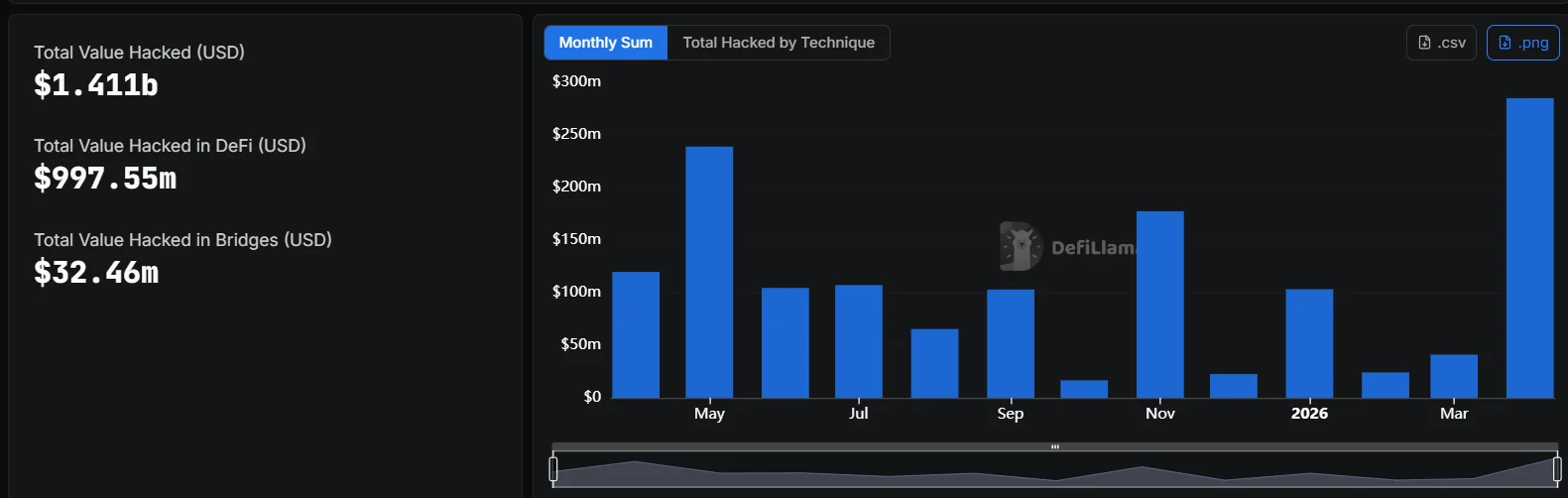
- Major security breaches this month include a $285 million drain from the Drift protocol and $25 million taken from Resolv
- Guillemet advocates for formal verification methods, dedicated hardware wallets, and cold storage as more robust protective measures
- Crypto users are advised to operate under the assumption that most platforms will face security compromises
Artificial intelligence technology is rapidly tilting the scales in favor of cybercriminals targeting cryptocurrency platforms, according to Ledger’s chief technology officer. The resources and technical expertise previously required to discover and weaponize system weaknesses are diminishing rapidly, creating unprecedented challenges for the digital asset sector.
In a recent discussion with CoinDesk, Charles Guillemet outlined how AI capabilities are transforming the threat landscape. Processes that historically demanded months of work from highly skilled security researchers can now be completed almost instantaneously with machine learning applications.
“Discovering security flaws and weaponizing them has become incredibly simple,” Guillemet explained. “We’re approaching a point where the expense is essentially negligible.”
His statements arrive at a particularly relevant moment. Earlier this week, the Solana-based decentralized finance platform Drift suffered a devastating $285 million security breach. Just days before, the yield-generating protocol Resolv fell victim to a different attack that resulted in $25 million in losses.
Data compiled by DefiLlama reveals that cryptocurrency platforms have experienced losses exceeding $1.4 billion throughout the previous year. Guillemet anticipates that AI advancement will drive these figures even higher.
The fundamental issue stems from changing cybersecurity economics. Historically, security frameworks succeeded because launching attacks required greater investment than potential gains. Artificial intelligence is undermining this equilibrium.
For cryptocurrency protocols managing substantial capital through automated code, the implications are severe. Guillemet summarized the challenge bluntly: “Absolute precision is required.”
Dangers of AI-Assisted Development
The vulnerability extends beyond external threat actors. As software engineers increasingly incorporate AI assistance into their development workflows, security weaknesses can be embedded into systems from the start.
“There’s no magic solution for instant security,” Guillemet stated. “We’re creating substantial amounts of code that contains inherent security flaws.”
He also highlighted emerging malware variants designed to scan infected mobile devices specifically for cryptocurrency wallet recovery phrases. Once obtained, attackers can completely drain accounts without requiring any victim action.
This evolution makes threats significantly harder to identify and impossible to prevent through conventional security measures such as code reviews.
Guillemet’s Security Recommendations
Guillemet emphasized formal verification as a superior alternative to traditional security audits. This methodology employs mathematical proofs to validate that code functions exactly as designed, minimizing opportunities for undetected vulnerabilities.
He also stressed the importance of hardware wallet solutions. By maintaining private keys on specialized devices with no internet connectivity, users dramatically limit their exposure to digital attacks.
“A dedicated device isolated from internet access offers inherently stronger security,” he noted.
For typical cryptocurrency holders, his guidance was unambiguous: never assume the platforms you’re using are impenetrable.
“The reality is that most systems cannot be fully trusted,” Guillemet warned.
He predicts a divergence in security approaches. Wallet providers and established protocols will likely allocate significant resources toward enhanced protection and evolution. However, general software ecosystems may struggle to maintain comparable standards.
The most recent incident reinforces his warnings. This week’s $285 million Drift breach already ranks among the most significant cryptocurrency security failures of 2026.
