

Quick Summary
- Over the last 30 days, DAL has gained approximately 5% while competitors like Southwest, United, and American Airlines declined over 10%
- First-quarter financial results will be released on Wednesday, April 8, before market open
- Iran conflict has driven jet fuel costs up 103% in one month to $195 per barrel — Delta maintains a no-hedging policy on fuel
- Wall Street forecasts Q1 revenue at $14.8B (up 5.38%) with earnings per share of $0.62 versus $0.46 year-ago
- From a technical perspective, DAL trades above its 50-day and 100-day EMAs, eyeing the $76 year-to-date peak as next resistance level
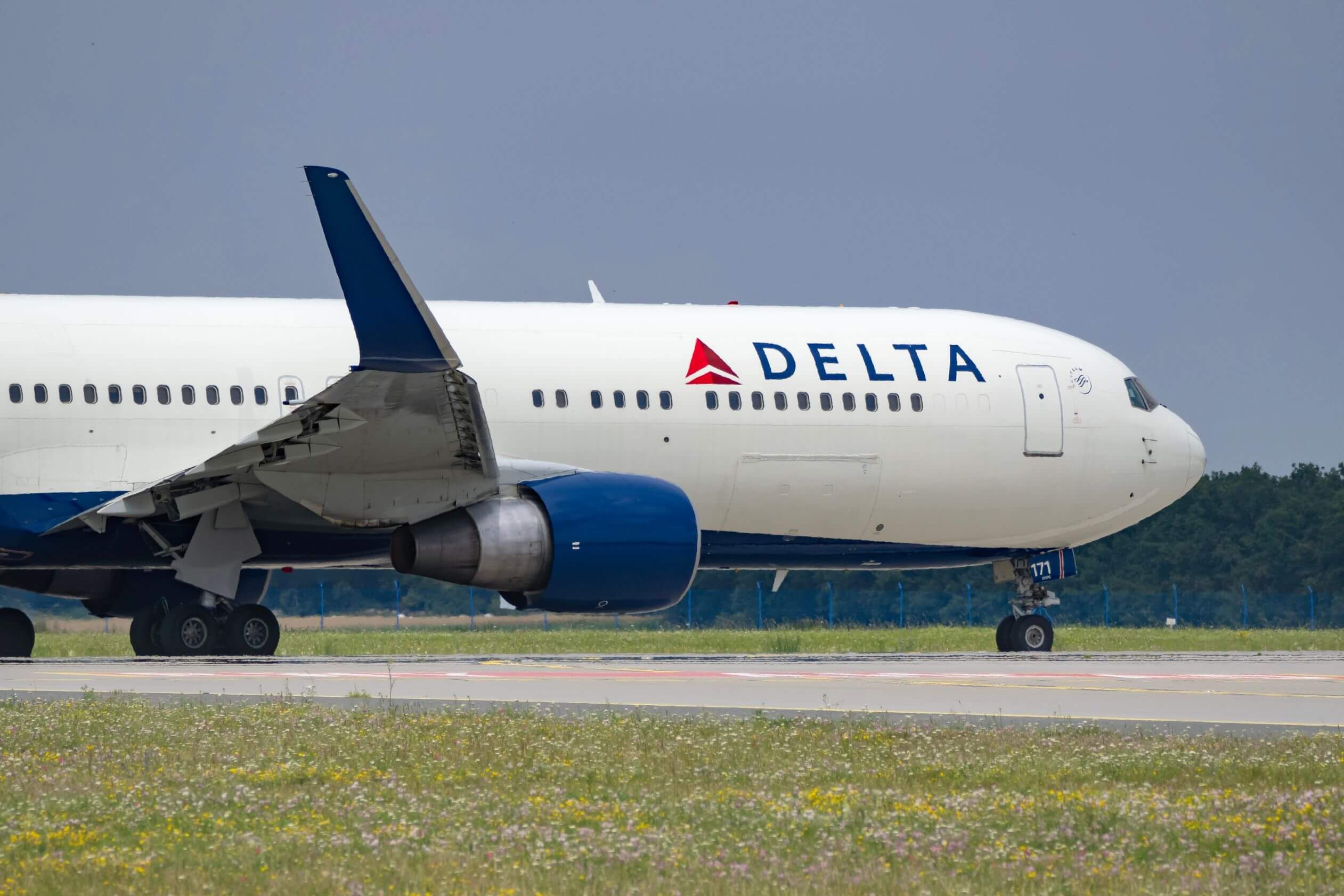
As Delta Air Lines prepares to unveil its first-quarter financial performance on April 8, the carrier is demonstrating resilience that sets it apart from industry competitors. The stock has gained approximately 5% during the past month, contrasting sharply with Southwest, United, and American Airlines, which have each shed more than 10% over the identical timeframe.
This divergence stems from several strategic factors. Delta has aggressively pursued the premium travel segment, capturing affluent passengers who maintain spending patterns during economic uncertainty. During the fourth quarter, premium ticket sales increased 9% to approach $5.7 billion, whereas main cabin revenue decreased 7% to $5.62 billion.
The carrier also rebounded impressively following a challenging late February period, when shares dipped beneath the 50-day moving average as Treasury yields and crude prices escalated after Iran conflict erupted. A decisive turnaround on March 9 enabled DAL to reclaim ground above that technical threshold.
The critical question now centers on Wednesday’s announcement.
Financial analysts project Q1 revenue reaching $14.8 billion, marking a 5.38% year-over-year expansion, with earnings per share arriving at $0.62 compared to $0.46 from the prior-year period. However, these projections face potential headwinds.
Soaring Fuel Expenses Present Major Challenge
Delta operates without fuel hedging contracts. This strategy is now proving costly. IATA data reveals average jet fuel prices have climbed to $195 per barrel — representing a 103% surge from one month prior — fueled by supply constraints linked to the Iran conflict.
This creates immediate margin compression. Delta will probably elaborate on how the conflict is influencing its 2025 projections during the earnings call. While the company successfully navigated the oil price spike following Russia’s 2022 Ukraine invasion, the current acceleration is particularly severe.
Management previously issued Q1 adjusted EPS guidance ranging from $0.50 to $0.90, with the $0.70 midpoint trailing slightly behind the $0.72 Wall Street consensus established when guidance was provided.
For fiscal 2025, Delta has established full-year earnings guidance between $6.50 and $7.50 per share. Annual revenue projections stand at $67.2 billion for 2025, climbing to $70 billion in 2026.
Technical Indicators Suggest Upside Potential
Examining the technical landscape, DAL has demonstrated strength. The stock recovered from a March bottom of $55.20 and currently trades near $66.70. It maintains support above both the 50-day and 100-day EMAs, along with an ascending trendline established since last June.
The price action has generated a harami candlestick formation — characterized by a smaller bullish candle following a larger bearish one — which technical analysts frequently interpret as a possible reversal indicator.
The year-to-date peak of $76 represents approximately 14% upside from present levels and constitutes the next technical objective on the chart.
During Q4, Delta reported revenue of $16 billion alongside an operating profit of $1.5 billion. For the complete 2024 fiscal year, revenue totaled $63.4 billion, operating profit reached $5.8 billion, and operating cash flow amounted to $14.1 billion.
