

Key Takeaways
- A two-week ceasefire between Trump and Iran sparked a significant rally across global markets
- The greenback plummeted to its weakest level since March 11, declining approximately 1%
- Major currencies including the euro, yen, pound, and antipodean dollars strengthened versus the dollar
- Bitcoin surged 3.2% to $71,514 while Ethereum jumped 5.7% to $2,235
- Oil prices declined on expectations of the Strait of Hormuz reopening, reducing inflation concerns
The greenback experienced a dramatic selloff on Wednesday following President Donald Trump’s announcement of a two-week truce with Iran. The development triggered a widespread rally in global currencies and digital assets as market participants rotated out of defensive positions.
Prior to the ceasefire, Trump had issued threats of extensive strikes against Iranian civilian targets. His warning that “a whole civilization will die tonight” unless his conditions were satisfied sparked widespread international criticism.
The truce came with under two hours remaining before Trump’s ultimatum for Iran to reopen the Strait of Hormuz expired. The development immediately transformed market dynamics toward risk appetite.
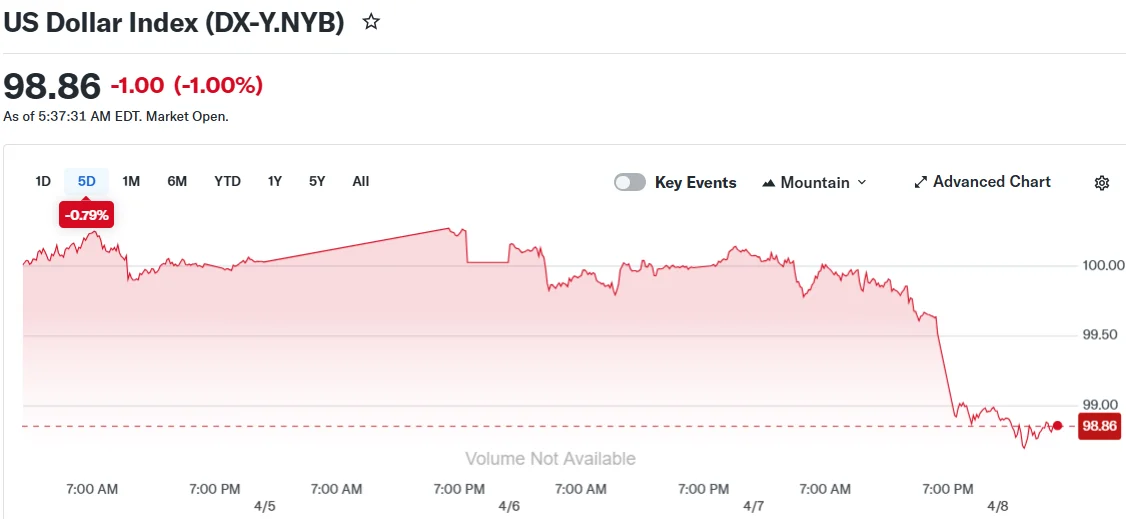
The U.S. Dollar Index, a measure of the currency’s performance against six major peers, dropped roughly 1% to settle at 98.943. This represents the index’s weakest reading since March 11 and tracks toward its largest one-day decline since April 21, 2025.
Investors typically flock to the dollar during periods of geopolitical turmoil. As tensions subsided, the appeal of holding dollars as a protective asset diminished accordingly.
The euro advanced 0.7% to reach $1.1677. Sterling posted a 0.8% gain, climbing to $1.3403. The Japanese yen appreciated 0.7% versus the dollar, settling at 158.50 per greenback.
The Australian dollar rallied 1.2% to $0.7063. The New Zealand dollar surged 1.1% to $0.5795. These currencies are particularly sensitive to risk appetite and typically appreciate when market optimism strengthens.
Digital Assets Participate in Broad Rally
Bitcoin pushed 3.2% higher to $71,514.03. Ethereum rallied 5.7% to reach $2,235.35. The gains aligned with broader market rotation into higher-risk investment categories.
Cryptocurrency markets have shown growing correlation with overall risk sentiment, a pattern that Wednesday’s trading session reinforced.
Energy Markets and Inflation Implications
Expectations surrounding the Strait of Hormuz potentially reopening placed downward pressure on oil prices. This waterway serves as a vital conduit for worldwide petroleum shipments.
Declining oil prices alleviate concerns about rising inflation. When inflation expectations moderate, the rationale for monetary authorities to tighten policy diminishes. Reduced interest rates typically undermine dollar strength, as international bonds become more appealing to foreign capital seeking enhanced returns.
Ray Attrill, head of FX strategy at National Australia Bank in Sydney, noted the ceasefire could sustain the risk-positive environment if the Strait successfully reopens. However, he cautioned that currency movements remain susceptible to sudden shifts throughout the 14-day truce period.
“Markets still need to proceed with a degree of scepticism,” Attrill said.
The Dollar Index has now posted losses for three consecutive sessions. While the ceasefire has provided markets with near-term momentum, strategists emphasize that outcomes over the coming fortnight will prove critical.
