


Key Takeaways
- BTC experienced a decline exceeding 4%, slipping beneath the $69,000 threshold while crude oil climbed to $119 per barrel
- Brent crude temporarily reached $119 driven by escalating U.S.-Iran tensions that disrupted energy supply chains in the Middle East
- Market experts caution that crude prices could potentially surge to $200 per barrel should the Strait of Hormuz remain blocked
- Federal Reserve maintained current interest rates and indicated potential postponement of rate reductions amid escalating inflation pressures
- Blockchain analytics reveal that addresses containing 100+ BTC increased by 753 wallets during the previous three-month period
The leading cryptocurrency experienced a significant downturn this week, descending beneath the $70,000 mark as escalating energy prices and conservative Federal Reserve messaging dampened investor confidence throughout global markets.
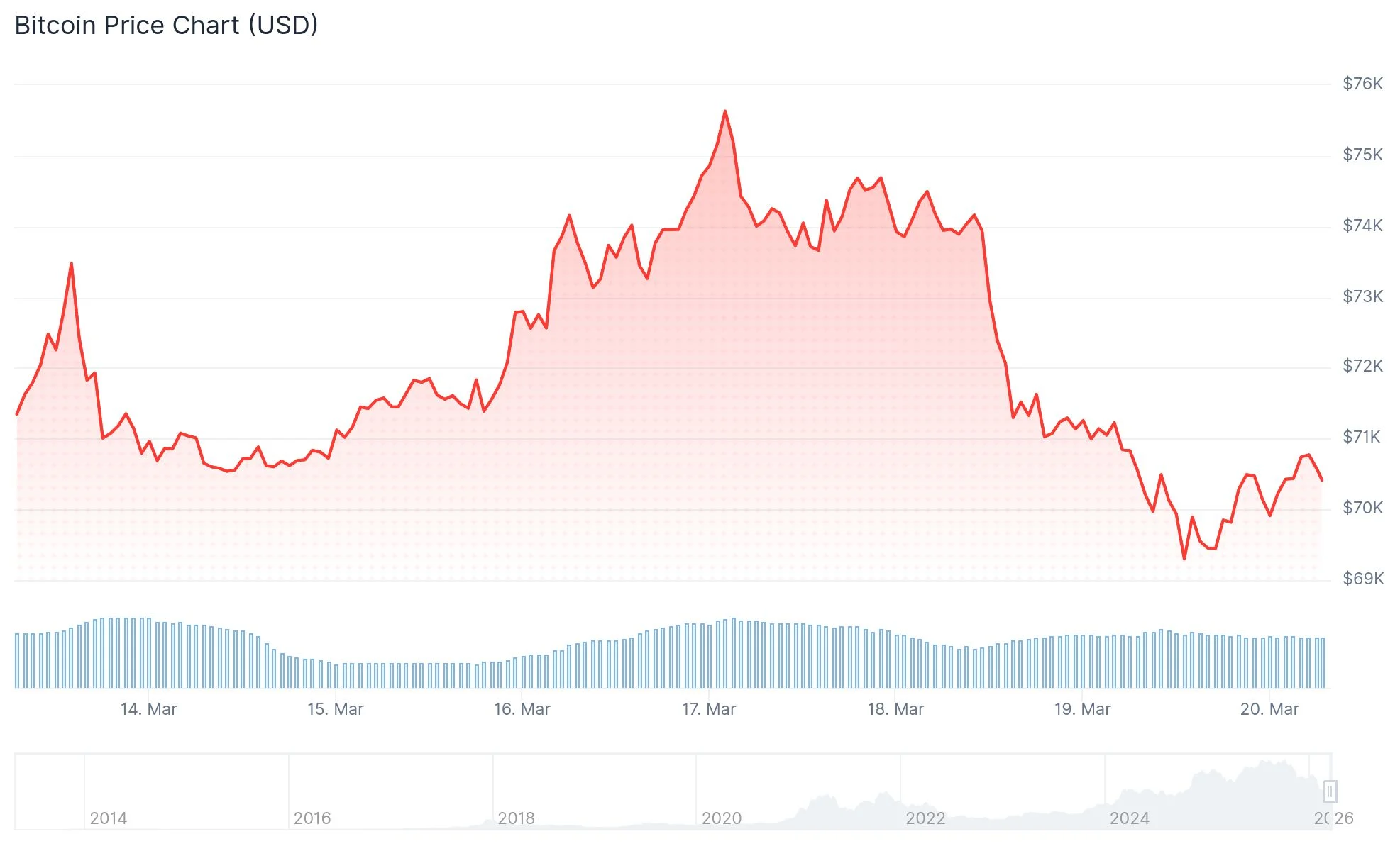
The flagship digital asset reached a Thursday low of $68,814, marking a decline exceeding 4% from its intraday peak above $71,000. Trading activity on Friday morning showed BTC stabilizing around $70,675, maintaining a modest downward trajectory.
This selloff coincided with Brent crude temporarily spiking to $119 per barrel on Thursday. The dramatic price movement resulted from intensifying hostilities between Washington and Tehran, with reports indicating both nations targeted energy infrastructure.
Regional benchmark oils including Oman and Dubai were already commanding prices exceeding $150 per barrel. Vandana Hari, who established oil analytics company Vanda Insights, shared with Al Jazeera that crude reaching $200 was “already within sight.”
“The trajectory of oil prices from this juncture depends almost completely on the duration the Strait of Hormuz stays inaccessible,” Hari explained.
Adi Imsirovic, an energy analyst at the University of Oxford, similarly informed Al Jazeera that $200 oil represented “perfectly possible” scenario and characterized it as “a major handbrake to the world economy.”
Energy Market Turbulence Pressures Speculative Assets
Financial analyst The Kobeissi Letter observed that Bitcoin’s retreat formed part of widespread liquidation connected to climbing energy costs. “The world is quite literally facing what appears to be the largest energy crisis in history,” they posted on X.
https://twitter.com/KobeissiLetter/status/2034608583887700121?s=20
Crude prices subsequently retreated following multiple strategic actions. Israeli Prime Minister Benjamin Netanyahu announced Israel would refrain from additional strikes on Iranian energy infrastructure. U.S. Treasury Secretary Scott Bessent indicated Washington might tap into the Strategic Petroleum Reserve and potentially permit sanctioned Iranian crude currently in transit to access international markets.
Brent crude declined back beneath $110 per barrel by Friday, contributing to market stabilization.
Federal Reserve Postpones Rate Reduction Timeline
The Federal Reserve maintained its current interest rate policy this week. Chair Jerome Powell cautioned during his post-meeting briefing that rising energy costs might elevate inflation in upcoming months, and suggested the institution would postpone rate adjustments until inflation demonstrates sustained improvement.
Producer Price Index figures released Thursday revealed inflation had already climbed to 3.4% during the previous month, predating the escalation of Iran-related tensions. Market participants are now reducing projections for potential Federal Reserve rate decreases throughout 2025.
https://twitter.com/santimentfeed/status/2034746092546662873?s=20
Notwithstanding the price correction, blockchain intelligence demonstrated that Bitcoin whale addresses containing 100 or more BTC expanded by 753 during the preceding three months, representing a 3.9% expansion, despite market capitalization declining 20.2% throughout the identical timeframe.
