

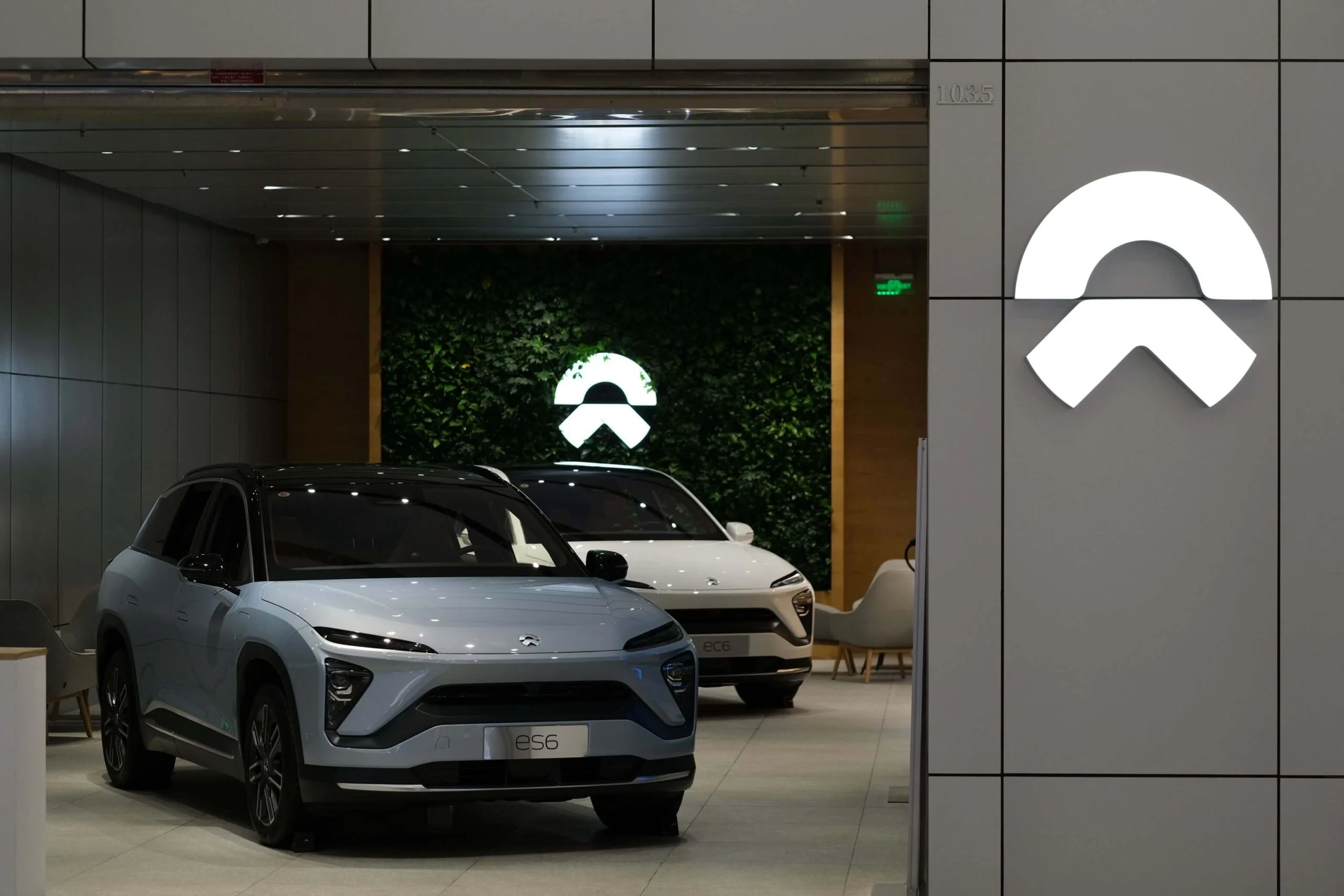
Key Highlights
- Nio shares advanced approximately 8% following the unveiling of the ES9 flagship SUV, equipped with the company’s proprietary Shenji intelligent driving chipsets.
- The automaker achieved its inaugural quarterly GAAP profitability in Q4 fiscal 2025, marking a significant milestone for the previously unprofitable electric vehicle manufacturer.
- Vehicle deliveries in March skyrocketed 136% compared to the previous year, while Q1 2026 aggregate deliveries hit 83,465 units — representing a 98.3% year-over-year increase.
- The company’s battery exchange infrastructure has expanded to approximately 3,815 swap stations and more than 28,000 charging points across global markets, strengthening its long-term competitive position.
- Challenges persist: decelerating Chinese EV demand, fierce pricing wars, escalating component expenses, and full-year fiscal 2025 losses despite quarterly gains.
Nio experienced substantial market gains Thursday, with shares advancing roughly 8% as several favorable developments converged simultaneously. The stock movement signals an evolving investor perspective on the Chinese electric vehicle manufacturer — transitioning from viewing it as a capital-intensive growth venture to recognizing it as a company demonstrating tangible execution.
The primary catalyst was the formal introduction of Nio’s ES9 luxury SUV. This vehicle represents the inaugural model powered by Nio’s proprietary Shenji intelligent driving semiconductors, designed and manufactured internally. This development carries strategic significance as it reduces reliance on external component vendors and provides Nio with enhanced oversight of its technological capabilities moving forward.
Just wrapped the NIO ES9 Product & Tech Launch, and pre-orders are now live! The pre-sale price starts from RMB 528,000 for full purchase and RMB 420,000 with Battery as a Service (BaaS) option. Shaped by NIO's 11 years of innovation, the ES9 is truly a masterpiece. Let's Power… pic.twitter.com/DAwIvZ5Djz
— William Li (@WilliamLiNIO) April 9, 2026
Positive momentum surrounding Chinese EV international sales also contributed to the rally. Export volumes from the sector recently achieved unprecedented levels, positioning Nio to capitalize on this expanding international presence.
Quarterly Profitability Marks Inflection Point
The most consequential driver of renewed market enthusiasm is Nio’s maiden quarterly GAAP profitability, achieved in Q4 fiscal 2025. This achievement represents the type of watershed moment that fundamentally alters valuation frameworks. For an extended period, Nio traded on future prospects. Now it can demonstrate actual profitability.
The company generated positive free cash flow for consecutive quarters and achieved positive operating cash flow for the complete fiscal 2025 year. While these metrics may not appear spectacular, they represent precisely the financial benchmarks critics claimed the company couldn’t attain.
Vehicle gross margins registered 18.1% in Q4, with premium SUVs such as the ES8 delivering margins approaching 25%. Leadership anticipates further margin expansion as additional large-format vehicles enter production in 2026, particularly the ES9 and ONVO L80 models.
Q1 2026 delivery performance demonstrated robust momentum. Nio distributed 83,465 vehicles during the period, representing a 98.3% year-over-year acceleration. Cumulative lifetime deliveries surpassed the one million vehicle threshold. March independently posted a 136% surge versus the corresponding period in the prior year.
Executive guidance projects 40% to 50% delivery expansion for the complete year, supported by upcoming product introductions and what management characterizes as broadening market opportunities.
Critical Factors Under Investor Scrutiny
The picture isn’t entirely favorable. Nio remained unprofitable for the complete fiscal 2025 year, notwithstanding the Q4 quarterly profit. The overall Chinese passenger vehicle sector is anticipated to contract modestly in 2026, according to management’s own projections.
Component and raw material expenses — including lithium carbonate, semiconductor memory, and various parts — are experiencing upward pressure. Nio maintains these cost headwinds are controllable and partly counterbalanced by higher-margin product configurations, though forward visibility remains constrained.
Competitive intensity within the Chinese EV landscape continues unabated. Industry-wide pricing aggression is compressing profitability for numerous manufacturers, and Nio faces similar pressures.
Regarding technological advancement, Nio’s autonomous driving system utilization increased over 80% in February 2026 following a NIO World Model software enhancement deployed in late January. Its power replenishment network now encompasses 3,815 battery exchange facilities and exceeding 28,000 charging stations globally.
The company’s upcoming quarterly financial disclosure is scheduled for June 2, covering Q1 fiscal 2026 performance.
