


Key Highlights
- Direct diplomatic negotiations between Washington and Tehran took place in Islamabad, Pakistan from April 11–12 in an attempt to resolve ongoing tensions
- After approximately 21 hours of discussions, Vice President JD Vance announced that negotiators failed to secure an agreement
- Tehran’s unwillingness to pledge abandonment of nuclear weapon development remained the primary obstacle
- Bitcoin experienced a roughly 2% decline, falling to $71,500 in the aftermath of the failed negotiations
- Additional cryptocurrency losses included XRP declining 1.69% to $1.33 and Ethereum falling 1.26% to $2,216, with the broader market down 1–3%
High-ranking officials from Washington and Tehran convened in Islamabad, Pakistan on April 11 for unprecedented direct diplomatic discussions—the first of their kind at this level in many years. These negotiations followed several weeks of military confrontation that erupted on Feb. 27, when combined American and Israeli forces executed “Operation Epic Fury,” striking Iranian military installations and nuclear facilities. The operation resulted in the death of Supreme Leader Ali Khamenei.
Peace talks appear to have come to a screeching halt.
JD Vance just announced that the US delegation is leaving Pakistan with no deal. And, Iranian media is reporting that Iran does not have plans for further talks with the US.
So, what does this mean going forward?
Currently,…
— The Kobeissi Letter (@KobeissiLetter) April 12, 2026
The military escalation created significant disruptions to international energy markets and triggered volatility across global financial systems. Critical maritime routes surrounding the Strait of Hormuz, responsible for transporting a substantial portion of the world’s petroleum supplies, experienced complications due to intensifying military activities.
Pakistan assumed a crucial intermediary position, providing neutral ground for both negotiating teams. While previous ceasefire attempts had achieved temporary reductions in combat operations, no permanent diplomatic solution had materialized prior to these discussions.
U.S. Vice President JD Vance is now en route back to Washington following unsuccessful trilateral talks between the U.S., Pakistan, and Iran. pic.twitter.com/Tvi5POL7xp
— OSINTdefender (@sentdefender) April 12, 2026
Prior to the commencement of talks, Tehran reportedly presented demands including removal of economic sanctions, restoration of access to internationally frozen financial assets, and comprehensive security assurances. Washington maintained firm requirements regarding stringent restrictions on Iran’s nuclear development activities and guaranteed freedom of navigation through strategic waterways.
Esmaeil Baqaei, spokesperson for Iran’s Foreign Ministry, characterized the 24-hour negotiation period as addressing multiple critical issues including Strait of Hormuz navigation rights, nuclear program limitations, compensation for war damages, sanctions removal, and comprehensive conflict resolution. He indicated that success hinged on “the seriousness and good faith of the opposing side.”
Baqaei additionally urged Washington to refrain from making “excessive demands and unlawful requests” while honoring Iran’s “legitimate rights and interests.”
Diplomatic Efforts Conclude Without Agreement
Following approximately 21 hours of intensive negotiations, Vice President JD Vance announced at a media briefing that the parties had been unable to reach a consensus.
“The bad news is that we have not reached an agreement,” Vance stated. He noted that American negotiators had articulated their requirements with complete clarity throughout the discussions.
According to Vance, the fundamental impediment centered on Tehran’s refusal to make binding commitments regarding nuclear weapon development. “The simple fact is that we need to see an affirmative commitment that they will not seek a nuclear weapon,” he explained.
The American delegation departed Pakistan without securing a diplomatic resolution. The trajectory of the conflict moving forward remains uncertain.
Cryptocurrency Markets Respond with Declines
Digital asset markets responded swiftly following Vance’s public statement. Bitcoin declined to approximately $71,500, representing a roughly 2% loss for the trading session.
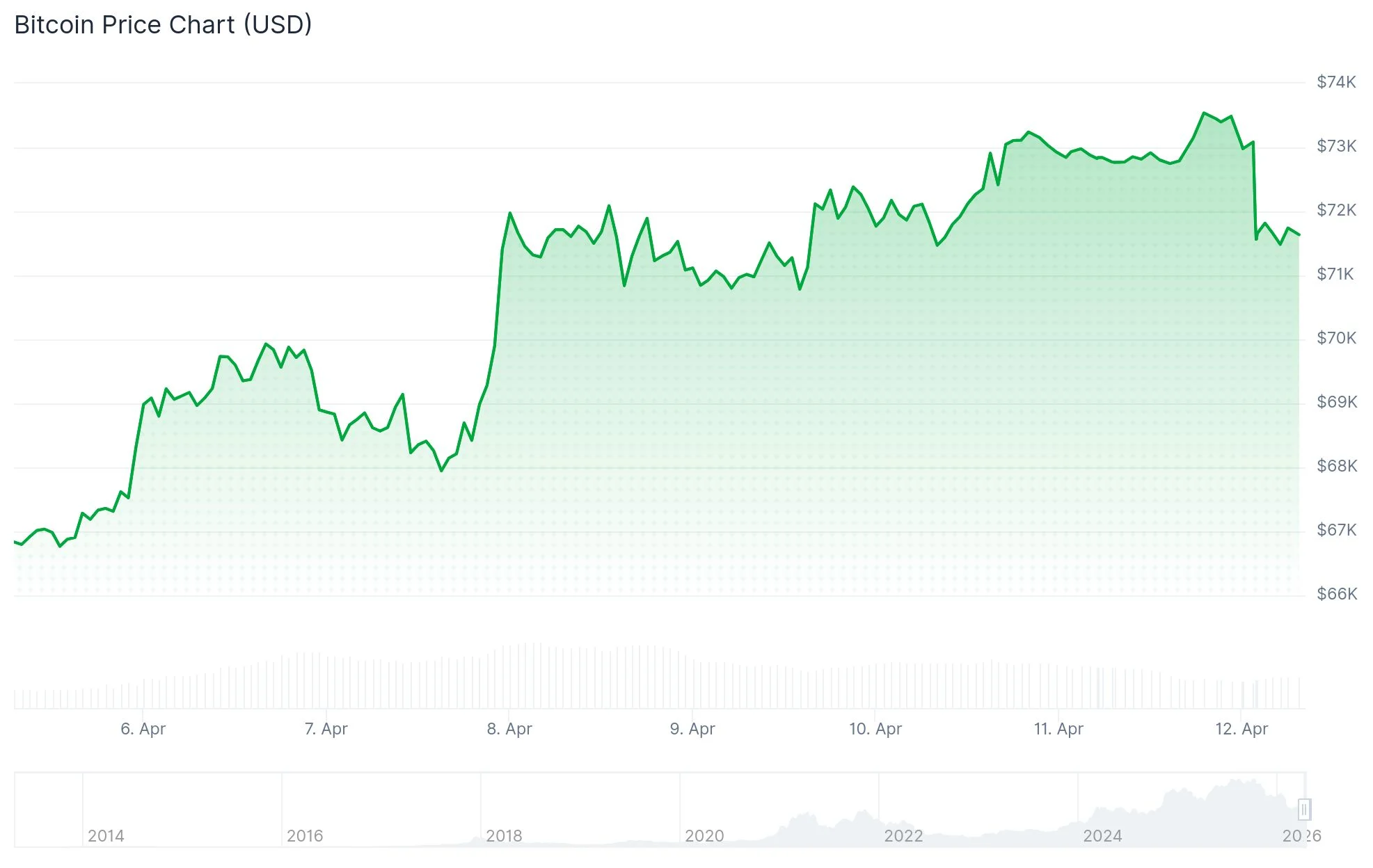
Short-term price charts revealed an abrupt selloff coinciding precisely with news reports regarding the diplomatic failure.
XRP experienced a 1.69% decrease to $1.33. Ethereum recorded approximately a 1.26% decline to $2,216. The wider cryptocurrency marketplace registered losses spanning from 1% to 3%.
As of April 12, the confrontation between Washington and Tehran persists without resolution following the unsuccessful negotiations.
