


Key Takeaways
- WLFI functions as a governance token without direct economic benefits for holders
- Project documentation explicitly states holders should not anticipate profit
- Insider group receives 75% of net proceeds from token sales and 60% of operational revenue
- Approximately 5% of capital raised was allocated to platform development
- Transfer restrictions on tokens create ongoing supply uncertainties
World Liberty Financial (WLFI) has generated significant attention within cryptocurrency markets. The project merges blockchain technology, political influence, and brand recognition. This combination has positioned it as one of the most talked-about digital assets recently. However, examining the official documentation reveals important considerations.
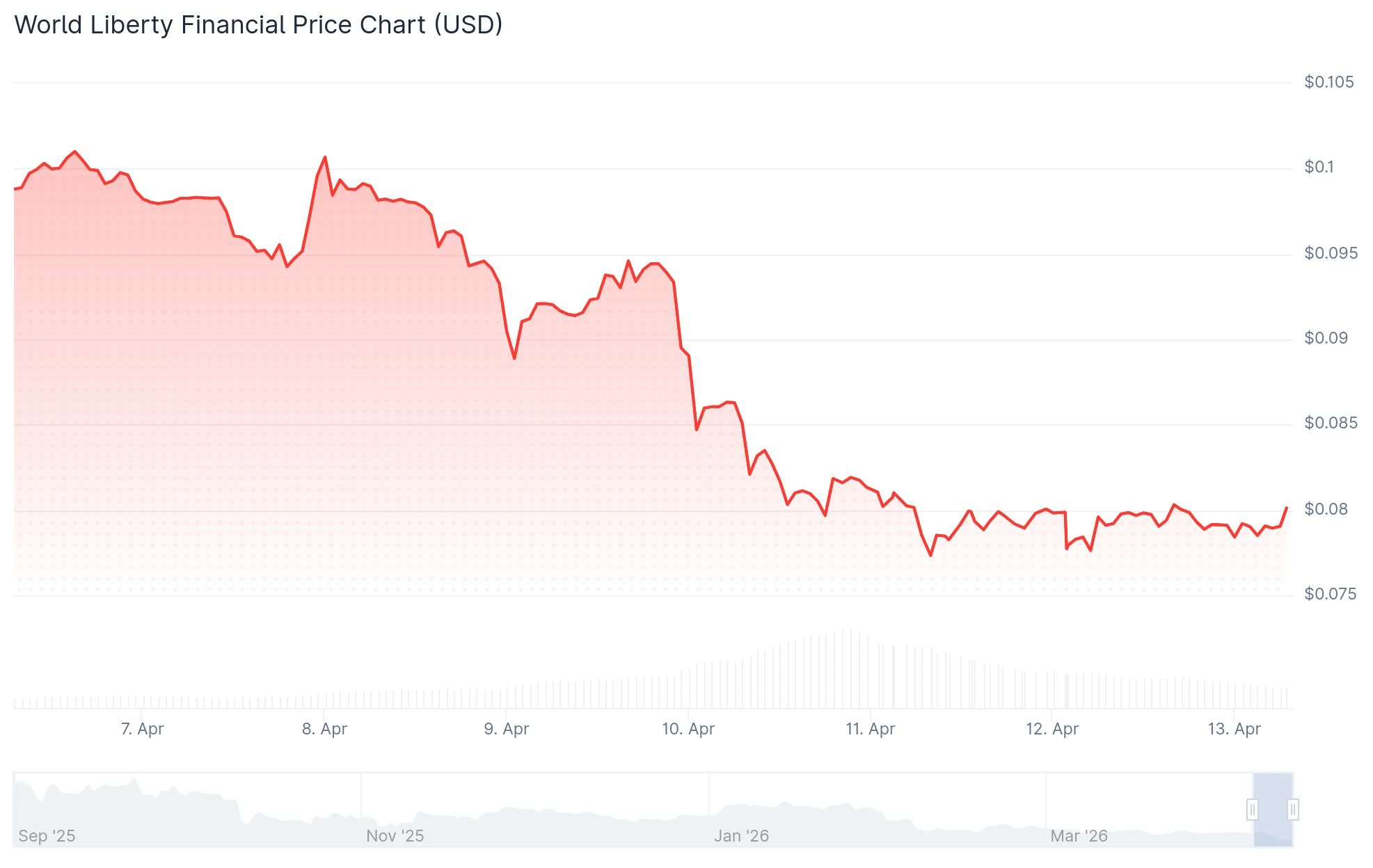
WLFI serves as the governance mechanism for the World Liberty Financial platform. The ecosystem encompasses USD1, a stablecoin pegged to the dollar, alongside wider DeFi initiatives. Initially, this framework appears promising.
Yet the project’s terms of service clarify that WLFI operates solely as a governance instrument. Token ownership conveys no economic entitlements connected to protocol operations. Official disclosures explicitly warn against expectations of financial gain from project performance.
This distinction matters significantly for anyone evaluating WLFI as an investment vehicle.
Ownership Model Provides Minimal Economic Benefits
The fundamental issue centers on value distribution. While a platform may expand and introduce new services, tokens that grant no revenue rights mean growth doesn’t necessarily translate to holder benefits.
WLFI’s design appears to disconnect token possession from any legal or financial stake in operational earnings. This separation makes fundamental valuation analysis challenging.
Reporting from Reuters in March 2025 indicated that a holding company controlled by the Trump family established majority ownership. The arrangement allocated 75% of net token sale proceeds and 60% of operational earnings to this entity. Following this distribution model, approximately 5% of raised capital remained available for actual platform construction.
This framework clearly advantages insiders rather than general token purchasers.
Transfer Restrictions Impact Market Dynamics
WLFI initially launched with non-transferable status. Token unlock events have occurred according to a predetermined timeline, constraining when initial purchasers could transfer their holdings. These limitations reduce available liquidity and create questions about eventual supply dynamics.
From an investor perspective, scheduled token releases can influence market pricing as significantly as product announcements.
March 2026 reporting from Reuters disclosed that the project extended an offer to investors: stake $5 million in WLFI tokens for six months to receive guaranteed direct communication with the business development leadership. This package included governance voting privileges and yield generation for participants. The structure positions WLFI partially as a premium access mechanism for substantial investors.
Concluding Analysis
WLFI may maintain market presence due to its political associations and ecosystem developments. However, according to its official disclosures, the token delivers governance participation without substantial economic entitlements, while insiders retain the majority of financial benefits.
The March 2026 Reuters coverage regarding the $5 million staking access program represents the latest publicly disclosed development concerning the token’s utility framework.
