


Key Takeaways
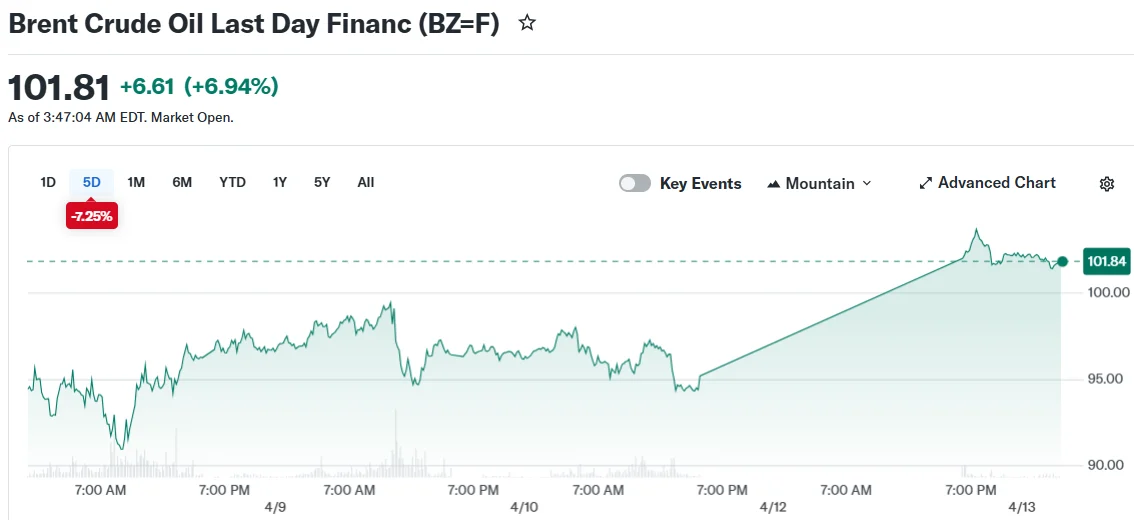
- Brent crude jumped more than 9% to approximately $104 per barrel following US announcement of Iranian vessel embargo
- Naval blockade implementation follows breakdown of ceasefire negotiations between Washington and Tehran in Pakistan
- Tehran declared it would not tolerate the embargo and refused to participate in future nuclear discussions
- Transit through the Strait has been severely restricted since military operations targeting Iran commenced in late February
- OPEC cautioned that infrastructure damage across Middle Eastern energy facilities will create lasting supply constraints
Oil prices experienced dramatic gains Monday following a US military declaration that it would commence blocking all maritime traffic associated with Iranian trade, pushing Brent crude beyond the $100 per barrel threshold for the first time in several months.
Brent futures climbed as high as 9.1% to approach $104 per barrel. European natural gas contracts surged nearly 18% during peak trading. US crude saw gains exceeding 7%.
The embargo targets all maritime vessels departing from or arriving at Iranian harbors. Ships merely transiting through the Strait of Hormuz without Iranian port calls remain unaffected by the new restrictions.
US Central Command indicated enforcement operations would commence at 10 a.m. Eastern time Monday. The declaration followed the collapse of diplomatic negotiations between the two nations in Islamabad during the previous weekend.
BREAKING: President Trump is looking at resuming "limited military strikes" in Iran in addition to the US blockade of the Strait of Hormuz, per WSJ.
Details include:
1. Trump could also resume a full-fledged bombing campaign, though officials said that was less likely
2. Trump…
— The Kobeissi Letter (@KobeissiLetter) April 12, 2026
Vice President JD Vance headed the American negotiating team and departed Pakistan early Sunday morning after 21 hours of discussions failed to yield any diplomatic breakthrough. Primary obstacles included Tehran’s nuclear ambitions, the restoration of normal Strait operations, and Iranian backing of regional militia organizations such as Hezbollah.
Tehran characterized US conditions as “excessive.” Officials indicated no intention to resume nuclear negotiations. President Trump responded to journalists: “I don’t care if they come back or not.”
Mohsen Rezaee, military adviser to Iran’s supreme leader, stated Iran “will not allow” the American embargo and possessed countermeasures to resist it.
The Strait of Hormuz had already experienced near-total disruption since American and Israeli military operations against Iran launched in late February. Tehran had implemented transit fees on certain vessels while maintaining traffic volumes far below pre-conflict levels, eliminating approximately 20% of world’s oil supply.
Global Race for Available Crude
Refinery operators and commodity traders worldwide are urgently seeking immediately accessible crude oil shipments as physical availability continues to tighten.
Market analysts suggest further price escalation remains possible. Jorge Montepeque from Onyx Capital Group stated on Bloomberg TV that current pricing inadequately reflects the risk environment. “It really makes no sense — it should be $140, $150,” he commented.
Monday morning saw two petroleum tankers attempt to navigate out of the Gulf through the Strait by maintaining proximity to Iranian territorial waters — marking the initial vessels to make the attempt since the blockade announcement.
Chinese Involvement Complications
Iran continued exporting crude oil and condensate from Persian Gulf terminals throughout March, with Chinese buyers representing the primary destination. Numerous tankers carrying Chinese-bound petroleum now find themselves affected by the blockade.
Former US Ambassador to Saudi Arabia Michael Ratney expressed alarm regarding potential scenarios where US Navy vessels intercept those ships, cautioning about possible deterioration in Washington-Beijing diplomatic relations.
The Wall Street Journal indicated that Middle Eastern governments were working to facilitate renewed ceasefire discussions between the United States and Iran in upcoming days.
OPEC is scheduled to release its monthly market analysis later Monday.
