

Quick Overview
- XRP commands a market capitalization of approximately $83.4 billion compared to Chainlink’s $6.6 billion, offering significantly greater liquidity
- The XRP Ledger processes transactions within 3–5 seconds with fees as low as 0.00001 XRP, establishing it as a payments-focused solution
- Chainlink has integrated its technology with major financial institutions including Swift, DTCC, Euroclear, and J.P. Morgan-associated tokenization initiatives
- Circulating supply stands at 61 billion XRP tokens from a 100 billion total, while Chainlink has approximately 727 million of its 1 billion maximum supply in circulation
- Each cryptocurrency pursues tokenized finance dominance through fundamentally distinct technological pathways
Those evaluating XRP versus Chainlink face a decision that transcends simple asset comparison. This choice represents a fundamental selection between contrasting visions of blockchain infrastructure, with the optimal decision heavily influenced by investment horizon.
XRP maintains a commanding lead in market presence. According to CoinGecko data, its valuation reaches approximately $83.4 billion against Chainlink’s roughly $6.6 billion. This substantial disparity carries meaningful implications. XRP enjoys broader exchange listings, commands greater retail investor interest, and typically captures gains when cryptocurrency markets shift toward established altcoins.
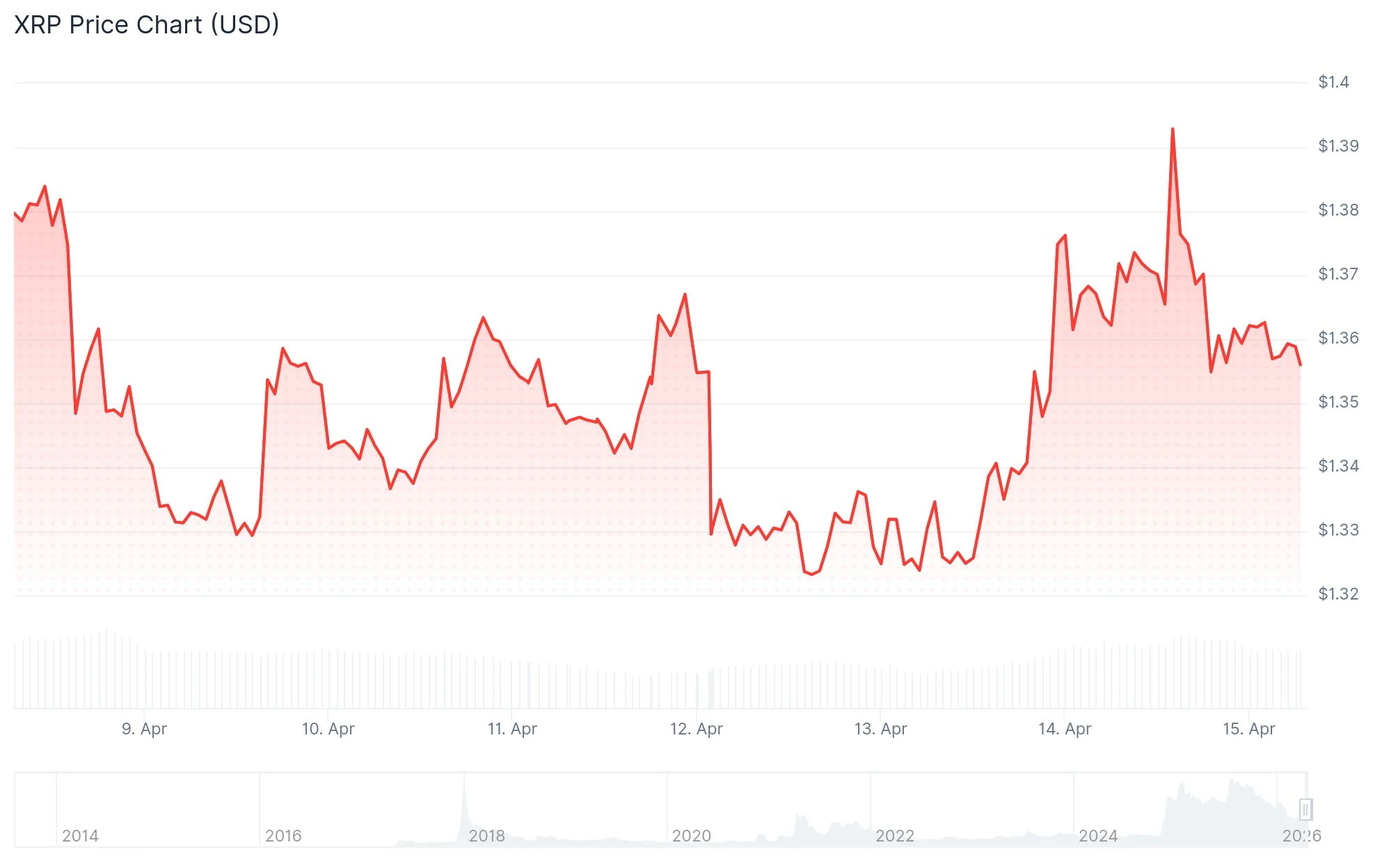
The investment thesis for XRP presents clearly. The XRP Ledger emerged specifically to facilitate payment transactions. Settlement occurs within three to five seconds, accompanied by minimal transaction fees of merely 0.00001 XRP. This represents an accessible, straightforward narrative for those seeking efficient, economical value movement.
Ripple continues expanding XRP’s enterprise credentials. The organization promotes the XRP Ledger as foundational infrastructure supporting tokenization and institutional-grade decentralized finance, integrating regulatory compliance mechanisms, instant settlement capabilities, and programmable asset frameworks. Investment conviction requires only confidence that existing collaborations will deepen rather than imagining entirely new applications.
Chainlink presents a more nuanced investment case. It doesn’t primarily function as a payment instrument. Instead, its significance lies in oracle services, blockchain interoperability via its Cross-Chain Interoperability Protocol (CCIP), and tokenized asset management processes.
Chainlink’s Enterprise Integration Network
Notwithstanding this complexity, Chainlink has established genuine institutional traction. The protocol has documented collaborations with Swift, DTCC, Euroclear, and programs connected to J.P. Morgan-affiliated tokenized finance developments.
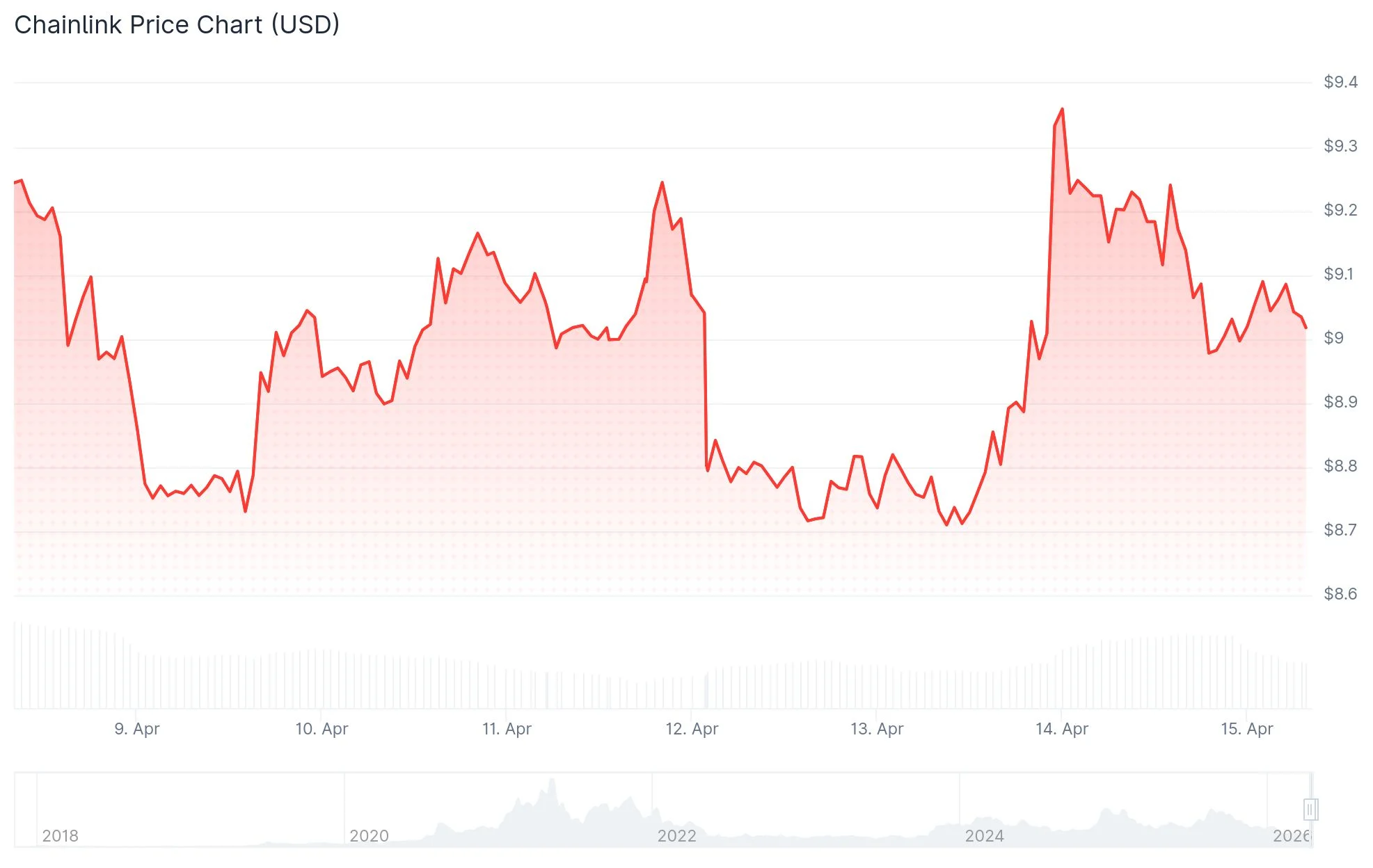
Chainlink positions itself as comprehensive infrastructure supporting tokenized asset lifecycles, encompassing data feeds, regulatory compliance verification, and inter-blockchain transfers. While this addresses an expansive addressable market, widespread adoption of this market remains prospective rather than present.
Token economics also differentiate these assets considerably. XRP maintains a capped total issuance of 100 billion tokens, with roughly 61 billion currently available in markets. This substantial reserve balance generates concerns regarding potential future dilution among some market participants. Chainlink features a 1 billion token maximum, with approximately 727 million presently circulating—a structure many analysts view as more favorable regarding inflation dynamics.
Matching Assets to Investment Horizons
For those operating on compressed timelines, XRP presents the more compelling immediate opportunity. It provides superior liquidity depth, communicates a more accessible value proposition, and benefits from more readily identifiable near-term catalysts.
For capital allocated with extended time horizons, Chainlink potentially delivers greater appreciation if tokenized finance achieves the scale many industry participants anticipate.
Chainlink might appear significantly undervalued retrospectively should it establish itself as the dominant data oracle and interoperability foundation for tokenized instruments. However, this scenario depends on market evolution that remains unrealized currently.
XRP’s trajectory appears more discernible presently. Its payments-centric identity stands established, enterprise partnerships demonstrate active progression, and market dominance proves difficult to overlook.
Concluding Assessment
Both cryptocurrencies rest upon legitimate fundamental foundations. XRP represents the superior near-term opportunity given liquidity advantages and narrative transparency. Chainlink constitutes the more speculative long-duration infrastructure thesis. Ultimate selection hinges on whether capital targets current blockchain applications or anticipated future development.
