

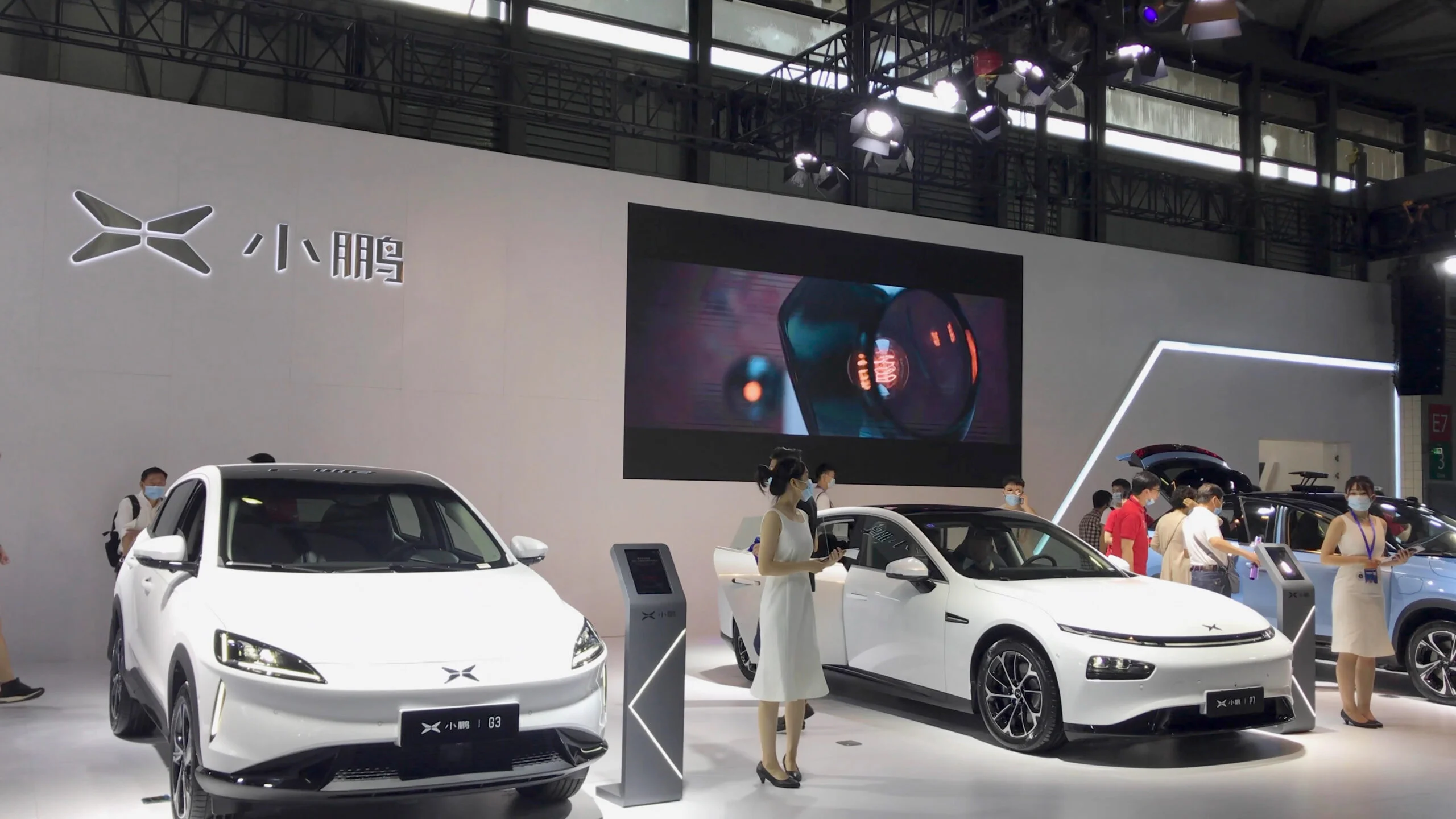
Key Highlights
- The Chinese EV manufacturer achieved its maiden quarterly net profit of 383.2 million yuan (approximately $55.5M) during Q4 2025
- Quarterly revenue surged 38% compared to the previous year, reaching 22.25 billion yuan and surpassing Wall Street projections
- Profit margins expanded to 21.3%, representing a significant increase from the prior year’s 14.4%
- Shares advanced roughly 2% during morning trade; American Depositary Receipts gained 0.8% to reach $19.30 before market open
- China’s three leading emerging EV manufacturers — XPeng, NIO, and Li Auto — have now all achieved profitability
The automaker shipped 116,249 electric vehicles during the fourth quarter, establishing a new company record, although falling short of its projected range of 125,000–132,000 units. Despite this shortfall, the financial performance exceeded expectations considerably — market analysts had anticipated a net loss approaching 200 million yuan.
🚨 $XPEV (XPeng) FY25 EARNINGS — BREAKOUT GROWTH + FIRST PROFIT 👀
This is a VERY important signal from the EV / China consumer side
📊 Q4 FY2025
🟢 Revenue: RMB 22.25B
🟢 Net Profit: RMB 0.38B (FIRST PROFITABLE QTR) 🚀
🟢 Gross Margin: 21.3% (record)
🟢 Vehicle Margin: 13.0%… pic.twitter.com/CN6EKklzhY— Emmanuel – Big Tech & AI Investor (@EmmanuelInvest) March 20, 2026
For the complete 2025 fiscal year, the company’s net loss contracted dramatically to 1.14 billion yuan compared to 5.79 billion yuan in 2024. Annual revenue experienced an impressive 88% surge, climbing to 76.72 billion yuan.
The profitability improvement proves equally remarkable. Fourth-quarter gross margin reached 21.3%, climbing from 14.4% during the same period last year. Annual gross margin finished at 18.9%, compared to 14.3% in 2024. Company executives attributed the improvement to sustained cost optimization initiatives and a more favorable vehicle mix.
This profitability achievement arrives amid an aggressive pricing environment across China’s electric vehicle sector. Competition among domestic manufacturers has intensified significantly, and XPeng stock remains down 12% year-over-year despite Friday’s upward movement.
NIO announced its inaugural quarterly profit last week following record delivery volumes. Li Auto, the earliest to achieve profitability among these three competitors, delivered a modest profit alongside softer sales figures — demonstrating that profitability alone doesn’t guarantee consistent performance in China’s intensely competitive automotive landscape.
Beyond vehicle sales, XPeng has been expanding its technological capabilities. The manufacturer recently introduced its VLA 2.0 self-driving platform, powered by proprietary semiconductor technology, with international deployment scheduled for 2027.
The company also intends to introduce three robotaxi variants this year targeting ride-sharing operations across China, with pilot programs anticipated to commence in late 2026.
Expansion Into Robotaxis and Humanoid Robotics
XPeng has been redefining itself as what management describes as a “physical AI company,” venturing into autonomous taxi services and humanoid robotics alongside its traditional electric vehicle operations. While these represent long-horizon investments, concrete implementation timelines are now emerging.
First-quarter 2026 projections, however, indicate a near-term deceleration. The company anticipates delivering between 61,000 and 66,000 vehicles, with revenue projected at 12.20–13.28 billion yuan. This represents a 16% to 23% year-over-year decline — a meaningful retreat from fourth-quarter performance.
First Quarter 2026 Outlook Indicates Seasonal Softness
The anticipated Q1 delivery decline mirrors typical cyclical patterns in China’s automotive sector following robust year-end sales periods. XPeng management has not indicated any fundamental concerns, characterizing the projection as consistent with normal first-quarter seasonality.
XPeng American Depositary Receipts traded 0.8% higher at $19.30 in premarket activity Friday after the financial results were released.
