


Key Highlights
- Fuel costs nationwide reached $3.91 per gallon, marking the steepest level since 2022, with $4 thresholds anticipated imminently
- Crude oil values have climbed over 40% following the escalation of conflict involving Iran
- Diesel fuel has jumped approximately 38% within 30 days, crossing the $5 mark for the first time since four years ago
- Pump prices have experienced a 30%+ increase over a 20-day period — representing the sharpest escalation recorded since 2000
- Israeli forces targeted Iranian energy infrastructure; Tehran responded with retaliatory strikes, creating extreme volatility in petroleum trading
Fuel costs across America are accelerating rapidly as Middle Eastern hostilities drive petroleum markets to multi-year highs. The nationwide average reached $3.91 per gallon by Friday’s close, representing the most expensive level witnessed since 2022, based on AAA tracking data.
Patrick De Haan, petroleum analysis chief at GasBuddy, indicated that the $4 per gallon threshold appears increasingly probable within the next several days.
Pump prices have surged more than 30% since military tensions with Iran intensified. This represents the most dramatic 20-day escalation documented since January 2000, per Dow Jones Market Data evaluation of Oil Price Information Service figures.
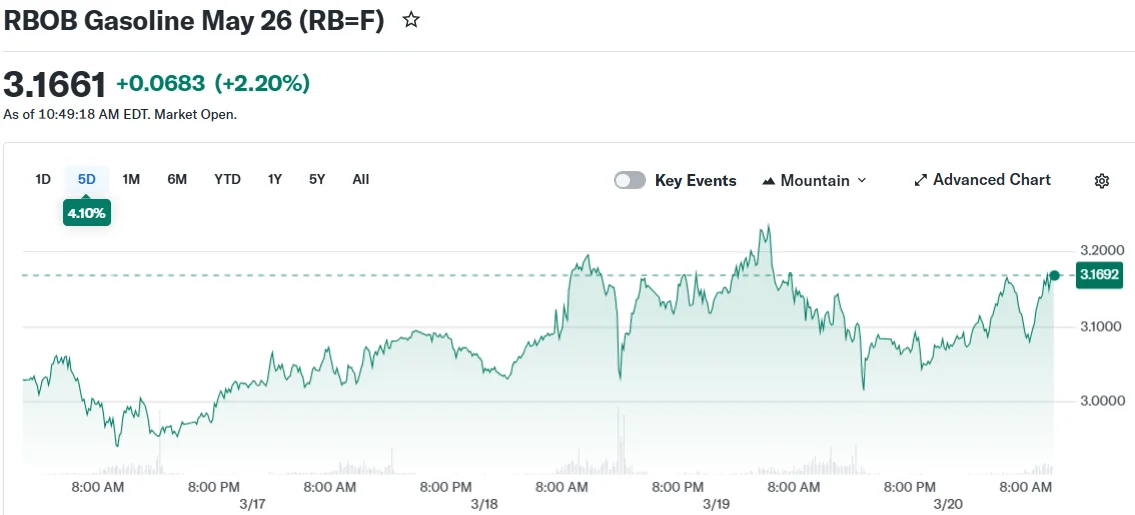
Through Thursday’s trading session, consumers were spending $3.88 per gallon on average. That figure represents a $0.98 jump from just 30 days earlier.
Oil prices have climbed more than 40% above levels seen when the Iranian conflict commenced. The seasonal transition to costlier summer-grade fuel formulations is compounding upward pressure on consumer costs.
West Texas Intermediate crude has pushed beyond $95 per barrel. Meanwhile, Brent crude, the international pricing benchmark, has exceeded $103 per barrel.
Diesel Surge Threatens Transportation Sector
Diesel fuel has experienced a roughly 38% spike over one month, surpassing $5 per gallon to touch a four-year peak. This development carries significant implications since approximately 70% of American goods rely on trucking for distribution.
Federal Reserve Chairman Jerome Powell acknowledged Wednesday that elevated energy costs threaten to amplify broader inflationary pressures. “There’s just lots of ways that oil and derivatives of oil get into the production and transportation of many, many things,” Powell remarked.
President Trump issued a temporary Jones Act suspension on Wednesday, permitting foreign vessels to transport cargo to various U.S. regions. De Haan suggested this action will produce limited impact on fuel pricing but could broaden supply chain alternatives.
Factors Behind the Petroleum Rally
The most recent price acceleration followed Israeli military strikes against a significant natural gas processing complex in southwestern Iran. Tehran launched counter-attacks aimed at regional energy facilities in response.
Dennis Kissler, senior vice president with BOK Financial, noted the intensifying conflict is maintaining crude markets in an extreme “fast market” trading environment.
Market participants are monitoring the Strait of Hormuz with heightened attention, as this critical petroleum shipping corridor has experienced substantially reduced flow volumes.
RBC Capital Markets projects crude could breach $128 per barrel — matching levels reached following Russia’s Ukraine invasion — should hostilities persist for an additional three to four weeks.
Should the conflict extend across several months, market analysts warn prices could surpass the 2008 historical peak of $146 per barrel.
