


Key Takeaways
- The Himalayan kingdom moved 519.7 BTC valued at $36.75 million this Wednesday
- Year-to-date Bitcoin sales from Bhutan have surpassed $152 million
- The nation’s BTC reserves have plummeted 66% from approximately 13,000 BTC to just 4,453 BTC
- Singapore-based QCP Capital appears to be the primary recipient through over-the-counter transactions
- The government’s commitment of 10,000 BTC toward the Gelephu Mindfulness City project now appears impossible to meet
The Royal Government of Bhutan has been consistently liquidating its Bitcoin holdings throughout 2026, with the selling pressure intensifying in recent weeks. In the most recent transaction on Wednesday, the government moved 519.7 BTC valued at approximately $36.75 million to an external wallet, based on tracking data from Arkham Intelligence.
Cumulative Bitcoin sales from Bhutan in 2026 have now exceeded $152 million.
The Himalayan nation accumulated its cryptocurrency reserves through government-operated hydroelectric mining facilities. Since the operation utilized excess renewable energy, mining costs were negligible. This means every Bitcoin sold represents nearly pure revenue for the state.
Bhutan’s Bitcoin treasury reached its zenith at roughly 13,000 BTC toward the end of 2024. From that point forward, the government has been systematically reducing its position. Current holdings stand at 4,453 BTC, representing a dramatic 66% decline from peak levels.
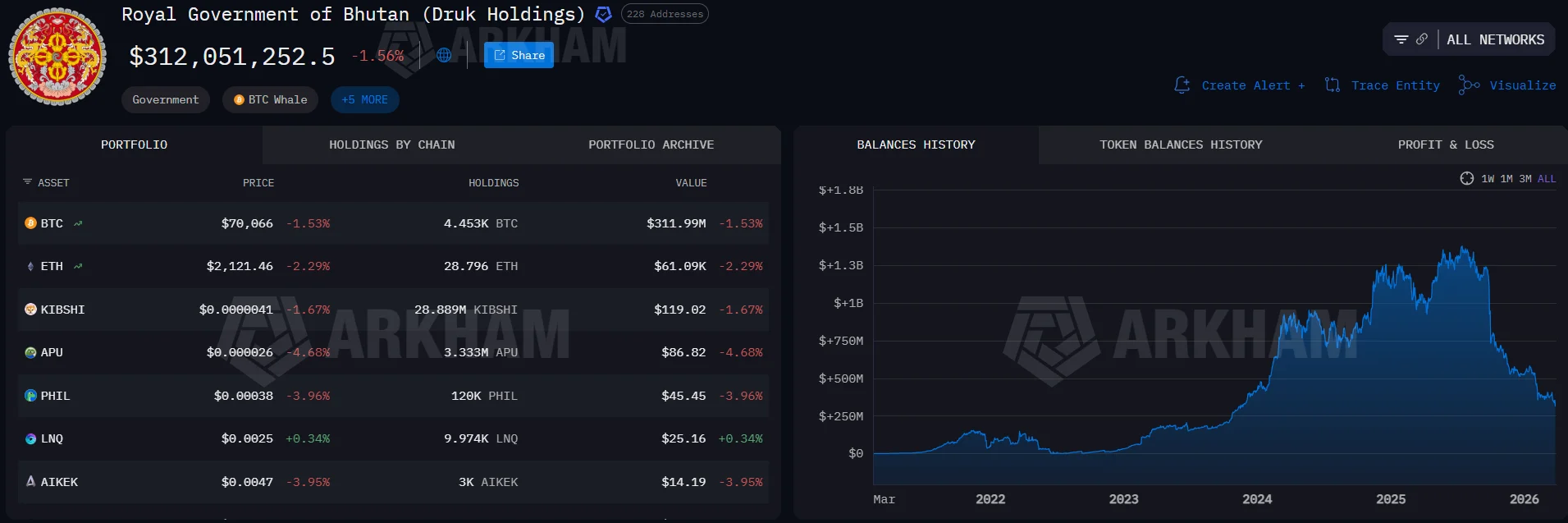
The liquidation campaign began modestly. During January and February, individual transfers ranged from $5 million to $15 million. By March, transaction sizes escalated substantially, with movements between $35 million and $45 million becoming the norm.
The previous week marked the most intensive period of Bitcoin activity from Bhutan on record. A series of transactions totaling approximately $72 million occurred within just seven days. The single largest transfer during this period involved 595.8 BTC worth $44.44 million.
Evidence of Structured OTC Distribution
QCP Capital, a cryptocurrency trading firm based in Singapore, has been the recipient of three distinct transfers from Bhutan’s treasury, totaling approximately $16.6 million in 2026. The recurring nature of these transactions to the same entity indicates a pre-arranged over-the-counter distribution strategy.
OTC transactions enable institutional holders to dispose of large positions without directly affecting public exchange prices, thereby minimizing market impact. Bhutan’s approach of dividing sales into multiple tranches aligns with this strategy.
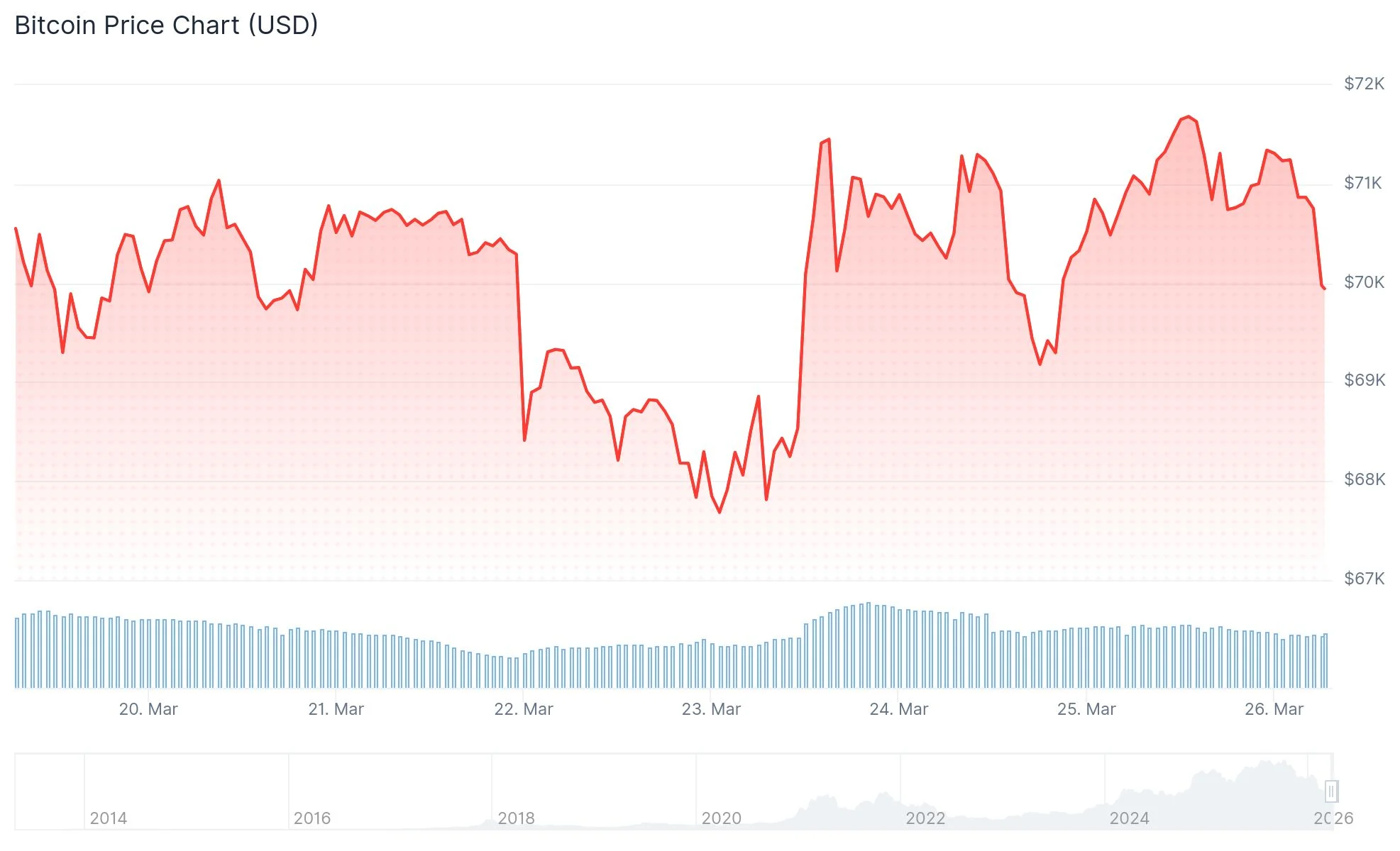
Bitcoin has traded in a range between $65,000 and $75,000 throughout March, significantly below its peak near $119,000. At maximum valuation, Bhutan’s holdings were worth approximately $1.88 billion. Today, the portfolio value has contracted to roughly $315 million.
Blockchain analysis reveals minimal new Bitcoin entering Bhutan’s wallets from mining activities in recent months. This observation suggests the government may have reduced or suspended its mining operations following Bitcoin’s most recent halving event.
The Gelephu City Commitment Crisis
In December, Bhutan unveiled a Bitcoin Development Pledge allocating up to 10,000 BTC to finance the ambitious Gelephu Mindfulness City initiative. When announced, that commitment represented approximately $860 million in value.
With current reserves below 4,500 BTC, the government now holds less than half the amount promised. Fulfilling the original pledge would require Bhutan to completely halt sales and more than double its existing holdings.
Wednesday’s transfer of 519.7 BTC represents the latest installment in what has evolved into an escalating trend of sovereign Bitcoin liquidation throughout 2026.
