


TLDR
- Major U.S. indexes posted substantial gains with the Dow climbing 1,000+ points (2.4%) and Nasdaq rallying 3.4% Tuesday
- The surge followed diplomatic signals suggesting the U.S.-Iran military conflict could be nearing resolution
- Iranian President Masoud Pezeshkian indicated willingness to conclude hostilities if provided with security assurances
- Reports emerged that President Trump is considering concluding operations without fully securing the Strait of Hormuz
- Crude oil markets responded with sharp declines, as Brent crude fell 2.8% on de-escalation hopes
Major U.S. equity markets experienced their most substantial single-session advances in months during Tuesday’s trading on March 31, 2026. The powerful rally unfolded after breaking news suggested both Washington and Tehran might be preparing to conclude their extended military confrontation.
The Dow Jones Industrial Average advanced 1,061 points, representing approximately 2.4% growth, to settle near the 46,140 level. The S&P 500 index posted a 2.7% increase, reaching approximately 6,496. The technology-heavy Nasdaq Composite outperformed, soaring 3.4% to finish the session near 21,517.
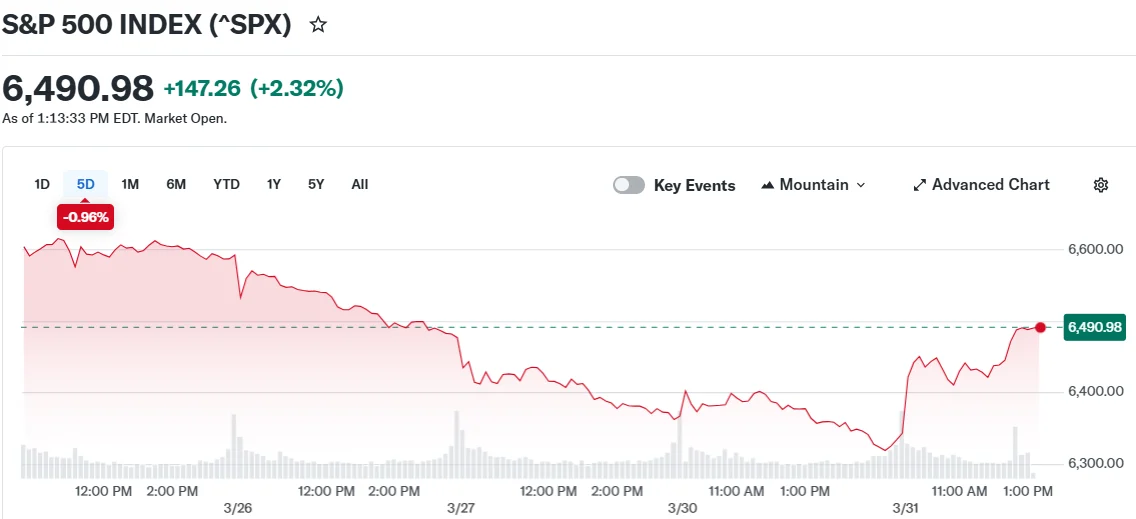
The market movements were dramatic and swift. Equity indexes accelerated sharply higher around 12:34 p.m. Eastern Time before experiencing modest profit-taking, though substantial gains remained intact through the closing bell.
The catalyst appeared to be two key developments. Iranian state television broadcast comments from President Masoud Pezeshkian indicating his nation stood “prepared to end” hostilities contingent upon receiving security guarantees from Washington.
BREAKING: Iran's President Pezeshkian says Iran is ready to end the war with the US but wants guarantees.
US stocks are surging on the news. pic.twitter.com/O1cePDFw6Q
— The Kobeissi Letter (@KobeissiLetter) March 31, 2026
Additionally, the Wall Street Journal published a report stating President Donald Trump had communicated to senior advisers his potential willingness to conclude military operations. The conflict had already extended beyond one month.
The strategically critical Strait of Hormuz has remained essentially blocked since hostilities commenced. This disruption has driven petroleum prices significantly higher and intensified concerns about potential global economic contraction.
According to sources, Trump and his national security team determined that fully securing passage through the strait would extend the operation beyond his publicly stated four-to-six-week objective.
Oil Drops on De-Escalation Reports
Oil prices tumbled rapidly following the diplomatic signals. Brent crude benchmark declined 2.8% to settle at $104.40 per barrel. West Texas Intermediate crude decreased 2% to $94.09.
The retreat in energy prices helped alleviate inflationary concerns, contributing to the improved market sentiment that characterized Tuesday’s trading session.
Monday’s session had painted a starkly different picture. Both the S&P 500 and Nasdaq finished in negative territory that day, while the Dow managed only marginal gains—just sufficient to technically exit correction status.
Crypto Reacts to Risk-On Sentiment
Digital asset markets also benefited from the enhanced risk appetite. Bitcoin and alternative cryptocurrencies typically correlate with broader risk sentiment, and Tuesday’s equity market strength attracted renewed buying interest.
The Nasdaq’s 3.4% advance represented its strongest performance in several weeks and propelled technology-related assets higher throughout the trading day.
Tuesday represented the concluding trading session for the first quarter of 2026. Market observers highlighted the timing of the rally, with some suggesting quarter-end portfolio rebalancing may have amplified the upward momentum.
As of mid-afternoon Eastern Time, the S&P 500 traded at 6,491, the Dow at 46,038, and the Nasdaq at 21,458.
President Trump has not issued an official declaration regarding ending military operations, and no formal ceasefire agreement has been publicly announced.
