

Key Takeaways
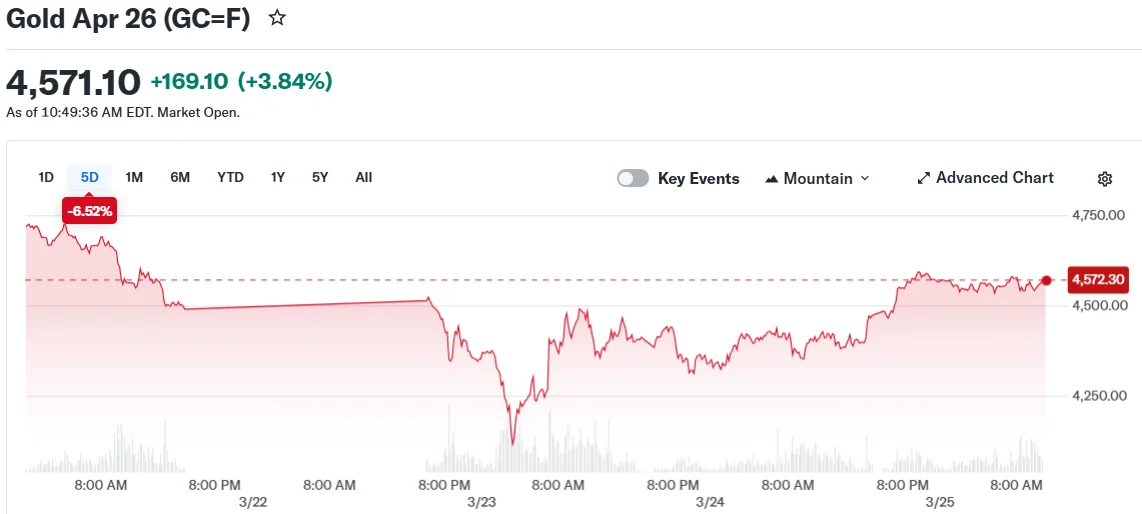
- Gold increased approximately 2% to reach $4,553 per ounce during Wednesday trading
- Washington delivered a comprehensive 15-point ceasefire framework to Tehran
- Iranian leadership dismissed the diplomatic initiative and maintained military operations against Israel and regional allies
- Crude oil temporarily fell beneath the $100 per barrel threshold amid ceasefire speculation
- Declining energy costs and dollar weakness contributed to gold’s upward momentum
Precious metal markets experienced significant gains on Wednesday following Washington’s presentation of a comprehensive 15-point diplomatic framework aimed at ending hostilities with Iran.
Spot gold advanced 1.8% to approximately $4,553 per ounce during mid-morning trading in New York. Futures contracts for U.S. gold surged 3.4% to reach $4,585 per ounce. This rally followed a 1.6% increase from Tuesday’s session, breaking a nine-session decline.
The diplomatic initiative, allegedly spearheaded by President Donald Trump, reportedly requires Tehran to decommission its primary nuclear facilities. The framework additionally demands the restoration of access through the Strait of Hormuz, a critical maritime passage south of Iran that has remained blocked to oil tanker vessels for several weeks.
Tehran swiftly rejected the ceasefire framework. According to the Fars news agency, Iranian officials stated that negotiations were impossible under present circumstances. A military spokesman from Iran declared that America was essentially “negotiating with itself.”
JUST IN: Iran responds on the Negotiations allegations:
"You have reached a stage where you are negotiating with yourselves"
“Do not call your defeat an agreement.”
“There will be no news of your investments in the region, and you will not see the former price of energy and… pic.twitter.com/ufZ0GchFjF
— Sulaiman Ahmed (@ShaykhSulaiman) March 25, 2026
Iran established preconditions for any potential dialogue, including the collection of transit fees from vessels navigating through the strait. Military operations targeting Israeli and Gulf Arab locations persisted regardless of the diplomatic overture.
Earlier in the week, Trump declared a five-day suspension of American military operations against Iranian energy installations. He characterized previous communications with Tehran as “productive.” Iranian representatives contradicted this assessment, accusing Trump of inventing the conversations.
Certain Gulf nations, particularly Saudi Arabia and the United Arab Emirates, allegedly encouraged Trump to maintain military operations until Iran’s regional power is diminished.
Energy Markets Decline, Boosting Gold
Oil prices retreated following the diplomatic developments. Brent crude momentarily dropped beneath $100 per barrel, although it continues trading substantially above the approximately $70 level observed before hostilities commenced in late February.
Decreasing energy costs can diminish inflation forecasts, which typically reduces bond yields and pressures the dollar downward. Both circumstances generally benefit gold, which generates no yield.
ING analysts observed that moderating oil prices and dollar softness provided additional support for gold. They emphasized that gold maintains sensitivity to currency fluctuations, geopolitical events, and Federal Reserve monetary policy directions in the immediate future.
Market Participants and Monetary Authorities Monitor Gold
Mark Haefele, chief investment officer at UBS Global Wealth Management, indicated in a research note that diminished investor exposure, reduced Middle Eastern demand, and interest rate increase expectations had pressured gold recently. He suggested these dynamics could shift in upcoming months.
Silver similarly appreciated, climbing 2.2% to $72.81 per ounce. Platinum posted gains while palladium declined.
Turkey’s monetary authority is allegedly exploring gold-for-foreign-exchange swap agreements in the London marketplace to shield the lira from conflict-driven instability. Market observers stated such transactions would not constitute a drawdown of reserves.
Spot gold traded at $4,558 per ounce during mid-morning hours in New York on Wednesday.
