

Key Highlights
- Intel has secured a partnership with Elon Musk’s Terafab initiative to manufacture semiconductors for SpaceX, xAI, and Tesla operations
- INTC shares climbed more than 4% following the announcement; TSLA declined approximately 2%
- The semiconductors will support Tesla’s autonomous taxi fleet, Optimus humanoid robot, and SpaceX’s satellite network with AI capabilities
- This partnership represents another significant victory for Intel as the company works to rebuild its manufacturing customer base
- Analysts at Morgan Stanley previously described Terafab as an ambitious undertaking, estimating chip production wouldn’t begin until at least mid-2028
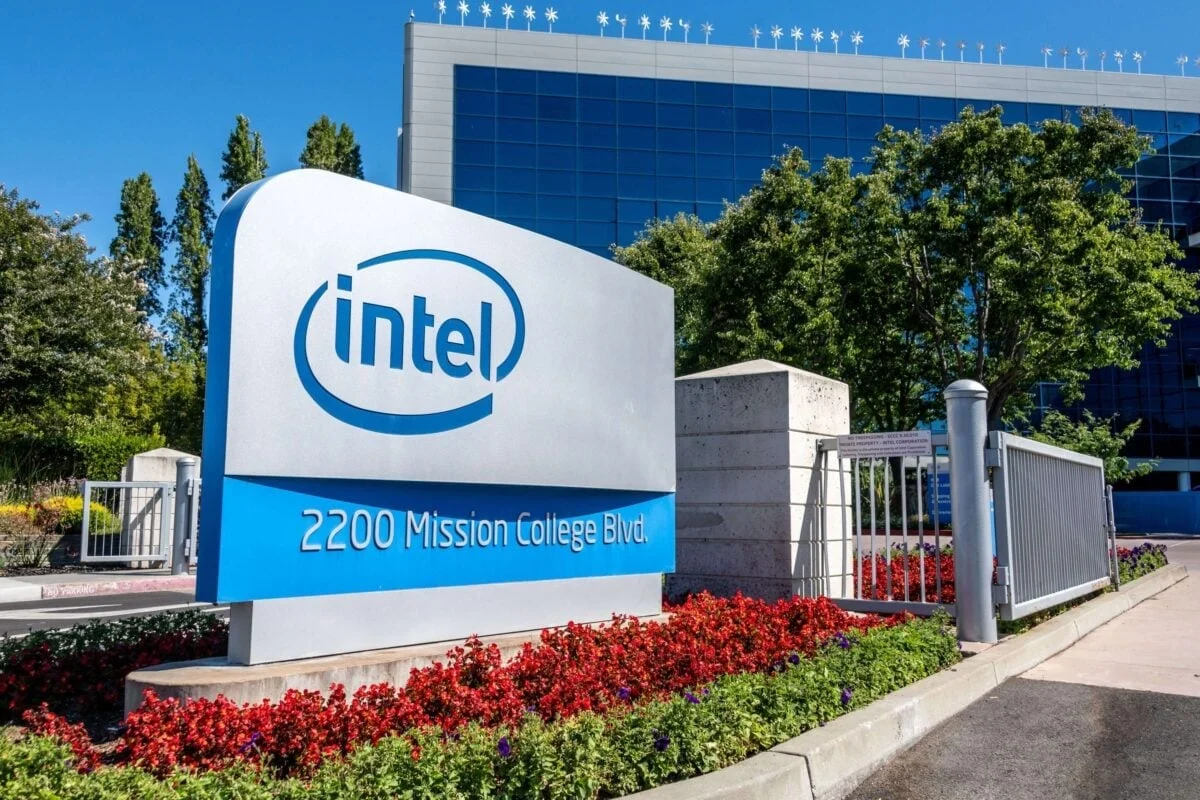
Intel has confirmed its involvement in Elon Musk’s Terafab initiative, committing to design, manufacture, and package semiconductors for use across SpaceX, xAI, and Tesla. The semiconductor manufacturer announced the collaboration Tuesday via a post on X, featuring an image of CEO Lip-Bu Tan meeting with Musk.
The news propelled INTC shares upward by more than 4% during Tuesday’s trading session. Tesla stock, conversely, retreated roughly 2% over the same period.
Musk initially revealed Terafab in March, describing it as a consolidated Austin, Texas campus where his portfolio of companies could both design and produce semiconductors in a single location. The objective centers on accelerating innovation by eliminating the traditional separation between chip design and manufacturing phases.
The manufacturing facility will produce semiconductors for Tesla’s autonomous vehicle program and the company’s Optimus humanoid robot initiative. Additionally, it will fabricate specialized chips engineered for space applications, supporting SpaceX’s plans to deploy numerous AI-enabled satellites.
For Intel, securing the Terafab partnership represents another significant milestone. The semiconductor giant has faced challenges in recent years — reducing manufacturing capacity precisely when data-center chip demand surged, allowing competitors Nvidia and AMD to capture market leadership.
Intel’s Strategic Resurgence
In a notable development last year, the Trump administration acquired an equity position in Intel valued at approximately $9 billion to strengthen the American chipmaker. As of March 20, the federal government controlled 8.4% of Intel’s outstanding shares, excluding warrants that could increase this ownership stake.
Following this investment, Intel has secured multiple high-profile agreements. The company already maintains a manufacturing relationship with Nvidia. Industry sources indicate potential contracts with Apple, Alphabet’s Google, and Amazon may be forthcoming, alongside a possible expansion of the existing Nvidia arrangement.
The Terafab collaboration continues this trajectory — with Intel regaining standing as a preferred fabrication partner among leading technology corporations.
From Musk’s perspective, Intel delivers manufacturing expertise and favorable political positioning during Terafab’s nascent development phase.
The Scope of the Project
Musk’s enterprises have traditionally obtained semiconductors from Nvidia, Samsung, and TSMC. The rationale behind Terafab centers on the belief that demand from SpaceX, xAI, and Tesla is accelerating beyond what external suppliers can accommodate.
Tan characterized the initiative as a “step change in how silicon logic, memory and packaging will get built in the future.”
Both Tesla and SpaceX validated the partnership through separate announcements on X.
Morgan Stanley research analysts noted in early April that Terafab constitutes a “herculean task” — projecting that even under optimistic conditions, semiconductor production wouldn’t commence until mid-2028 at the earliest.
