


Key Highlights
- Bitcoin plummeted from $75,000 to $66,000 over the trading week; Ethereum breached critical $2,000 threshold
- Major U.S. equity benchmarks slipped into correction mode, with the S&P 500 recording its most extended decline since 2022
- Crude oil prices exceeded $100 per barrel amid escalating Middle East hostilities, triggering widespread risk aversion
- Coinbase introduced cryptocurrency-collateralized home loans, while Tether engaged KPMG for comprehensive financial review
- David Sacks departed his position as White House Crypto Czar following a one-year tenure
Financial markets endured significant turbulence throughout the trading week. Digital assets and traditional equities experienced substantial declines as energy costs skyrocketed and market participants retreated from higher-risk investments.
[[LINK_START_2]]Bitcoin[[LINK_END_2]] tumbled from its weekly peak of $75,000 to reach $66,000 by Friday, March 27. Ethereum slipped beneath the psychologically important $2,000 threshold, a critical level monitored by market analysts and traders.
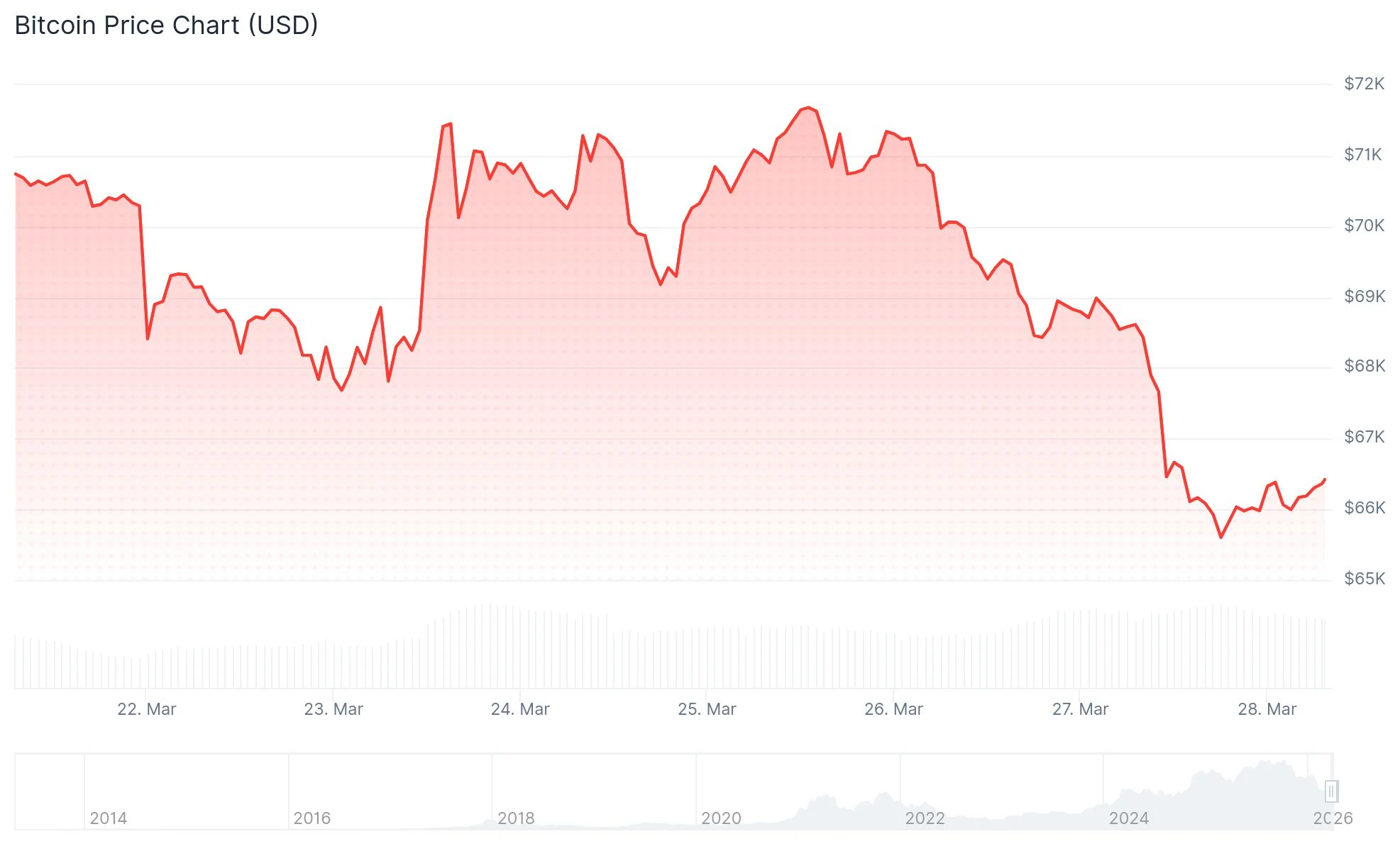
Both Solana and XRP concluded the week with substantial losses. The cryptocurrency sector mirrored equity market weakness as anxiety permeated across asset classes.
Regarding traditional markets, the S&P 500 extended its decline for a fifth consecutive week, marking its lengthiest downturn since 2022. The Dow Jones Industrial Average officially entered correction phase, declining more than 10% from recent peaks.
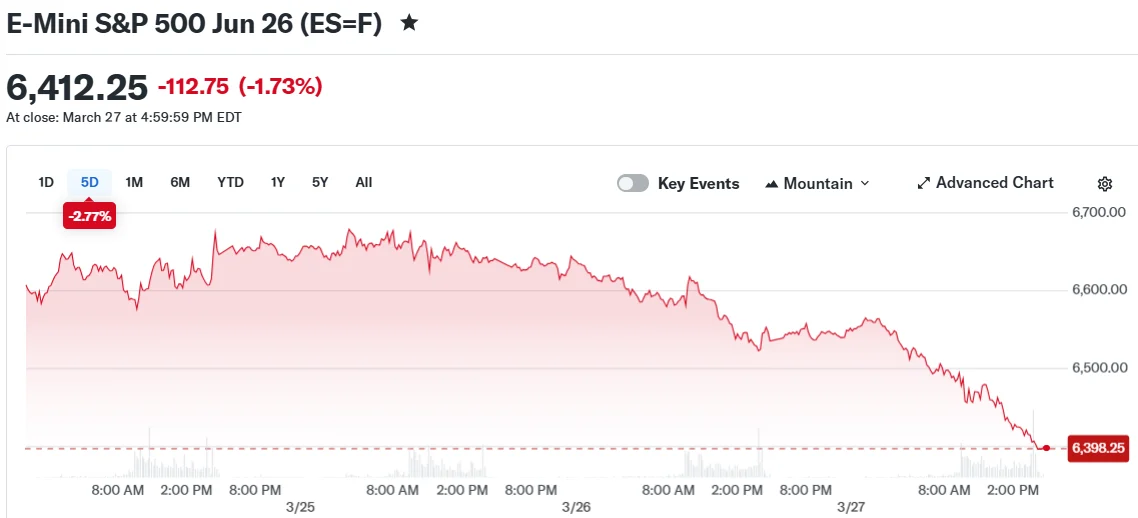
The Nasdaq plunged 2.1% during Friday’s session alone, deepening its correction status. The “Magnificent Seven” technology giants collectively shed over $330 billion in valuation during a single trading day.
Oil emerged as the primary catalyst behind market turmoil. Brent crude exceeded $106 per barrel while West Texas Intermediate surpassed $100, as regional hostilities throughout the Middle East heightened concerns about prolonged conflict extending into April.
President Trump granted Iran an additional 10-day extension, pushing the compliance deadline to April 6 before potential military action targeting power infrastructure. Financial markets continued experiencing volatility notwithstanding the postponement.
Significant Cryptocurrency Sector Developments
[[LINK_START_6]]Coinbase[[LINK_END_6]] unveiled a cryptocurrency-backed mortgage product available to U.S. homebuyers. The digital asset exchange partnered with Better Home & Finance, enabling purchasers to utilize Bitcoin for property down payments through a government-supported initiative.
Stablecoin provider Tether appointed accounting giant KPMG to conduct audits of its $185 billion USDT stablecoin reserves. This strategic decision aligns with Tether’s expansion efforts targeting U.S. markets. Following the announcement, Circle Internet Group shares declined 24% throughout the week.
Intercontinental Exchange, which operates the New York Stock Exchange, committed $600 million to prediction marketplace Polymarket. This capital injection positions Polymarket for expansion as conventional financial institutions increasingly explore the prediction market sector.
Regulatory Updates and Policy Changes
David Sacks concluded his appointment as White House Crypto Czar after serving one year. During his tenure, Sacks guided initial White House digital asset initiatives, including facilitating the GENIUS Act’s legislative passage, and has transitioned to the President’s Council of Advisors on Science and Technology. His successor remains unannounced.
Prediction platform Kalshi experienced a valuation surge to $22 billion in recent fundraising, doubling from its $11 billion December assessment. This milestone occurred concurrently with Arizona prosecutors filing 20 criminal charges against Kalshi, alleging unauthorized gambling operations.
Approximately $15 billion in Bitcoin options contracts reached expiration on Deribit March 27, comprising 40% of the platform’s total outstanding positions. A comparable $19 billion contract expiration last September coincided with the beginning of Bitcoin’s ongoing correction, which has now exceeded 40% since October highs.
