

Key Takeaways
- President Trump ordered a five-day suspension of military operations targeting Iran’s energy facilities
- Weekend negotiations between Washington and Tehran yielded “major points of agreement,” according to the White House
- Defense sector stocks showed mixed performance — NOC and LMT declined less than 1%, while GD and L3Harris posted modest gains
- The iShares Aerospace & Defense ETF has declined approximately 9% since Iran tensions escalated
- Industry analysts cite federal budget uncertainty and Congressional gridlock as additional challenges for defense contractors
On Sunday evening, President Donald Trump announced via Truth Social that he had directed the Department of War to suspend planned military operations against Iranian energy facilities and power plants for a five-day period.
🚨 President Donald J. Trump calls for a pause on all military strikes against Iranian power plants and energy infrastructure for a five-day period, subject to the success of the ongoing meetings and discussions. pic.twitter.com/N15CTRvikT
— The White House (@WhiteHouse) March 23, 2026
The president revealed that diplomatic discussions occurred over the weekend, spearheaded by Middle East envoy Steve Witkoff alongside Jared Kushner. During a Monday press briefing, Trump indicated the parties had achieved “major points of agreement” and expressed optimism that a comprehensive deal could materialize quickly if negotiations maintain their current trajectory.
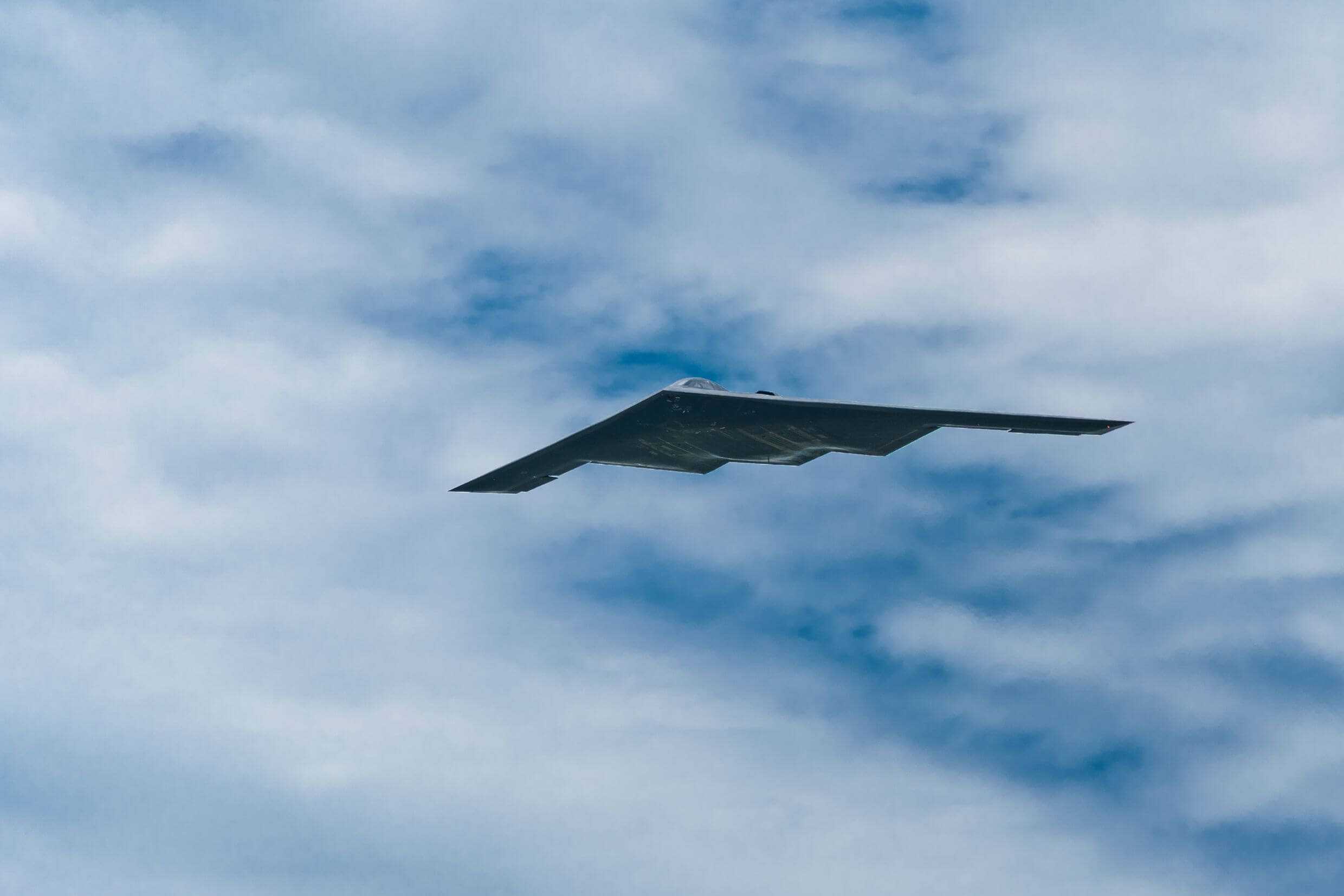
Northrop Grumman Corporation, NOC
Market reaction was swift, with the S&P 500 surging approximately 1.4% and the Dow Jones Industrial Average posting similar gains. Brent crude oil futures tumbled 6.7%, settling at $99.27 per barrel.
Defense industry equities, however, failed to mirror broader market enthusiasm. Northrop Grumman (NOC) alongside Lockheed Martin (LMT) both retreated by less than 1% during Monday morning sessions. Meanwhile, General Dynamics (GD) and L3Harris Technologies registered marginal gains below 1%.
The defense sector has notably lagged throughout the Iranian conflict. By Monday’s opening bell, the iShares Aerospace & Defense ETF had surrendered roughly 9% of its value since hostilities commenced — trailing the S&P 500 by approximately 4 percentage points during the identical timeframe.
Federal Spending Uncertainties Weigh on Sector
In a Sunday research note, Capital Alpha Partners analyst Byron Callan highlighted budgetary challenges confronting the industry. “Discussions surrounding a $200 billion supplemental appropriation and a $1.5 trillion DoD budget have negatively impacted U.S. defense sector sentiment,” he observed.
Callan additionally referenced the ongoing impasse regarding Department of Homeland Security appropriations as evidence of Congressional dysfunction that complicates prospects for expanded defense expenditure authorization.
The uranium issue persists as a critical sticking point. Among Washington’s primary objectives in confronting Iran is addressing Tehran’s accumulation of highly enriched uranium.
Uranium achieves “highly enriched” classification when it contains greater than 20% concentration of the U-235 isotope. Intelligence assessments suggest Iran possesses material enriched to 60% U-235 — falling short of the 90% threshold necessary for weaponization, yet substantially exceeding levels required for peaceful civilian applications.
Diplomatic Efforts Extend Through Monday
President Trump verified Monday that negotiating teams would sustain discussions throughout the day. He suggested an agreement could emerge “very soon” should current momentum continue.
The five-day operational suspension creates a crucial diplomatic window for both nations. The ultimate outcome of ongoing discussions — especially concerning Iran’s enriched uranium reserves — will likely influence investor sentiment toward defense contractors in the immediate future.
Northrop Grumman shares traded down approximately 1.3% in early Monday action, while Lockheed Martin declined 0.5%. General Dynamics advanced 0.93%.
