

Key Highlights
- Tesla’s Japan retail footprint will expand from 35 to at least 60 locations.
- The electric vehicle maker targets Japan’s leading imported car brand position by 2027.
- First-quarter 2026 Japanese deliveries reached approximately 5,000 units, nearly half the 2025 annual total of 10,000.
- The newly introduced Model Y L variant features six seats designed for Japanese households.
- Hybrid vehicle preference among Japanese buyers presents a significant obstacle for electric vehicle manufacturers.
Tesla (TSLA) is trading down 5.42% at the time of writing.
Tesla’s Japanese operations have developed gradually beneath the radar for several years. The automaker is now declaring its intentions publicly. Japan country manager Richi Hashimoto announced Friday that Tesla aims to capture the top spot among imported automobile brands in the country — potentially achieving this milestone within twelve months.
The challenge is substantial. Germany’s premium automakers have historically dominated foreign vehicle sales in Japan. Mercedes-Benz led 2025 with approximately 51,000 units delivered, trailed by BMW, Volkswagen, and Audi. Tesla managed slightly more than 10,000 deliveries during the same period. The distance between current position and stated goal is considerable.
Yet Tesla is advancing aggressively. Order books opened Friday for the Model Y L, featuring three-row, six-passenger seating configured specifically for Japanese family buyers — a demographic the automaker has previously overlooked. This product introduction demonstrates Tesla’s strategic pivot toward broader market penetration beyond tech-enthusiast early adopters.
🚨BREAKING: $TSLA MODEL Y L NOW ON DISPLAY AT TESLA STORES IN JAPAN 🇯🇵
The Model Y L is scheduled to be unveiled to the public in both Korea and Japan at the same time. https://t.co/rwijMlTBM4 pic.twitter.com/NMWKontg91
— Tsla Archive (@tesla_archive) April 2, 2026
Retail Infrastructure Expansion
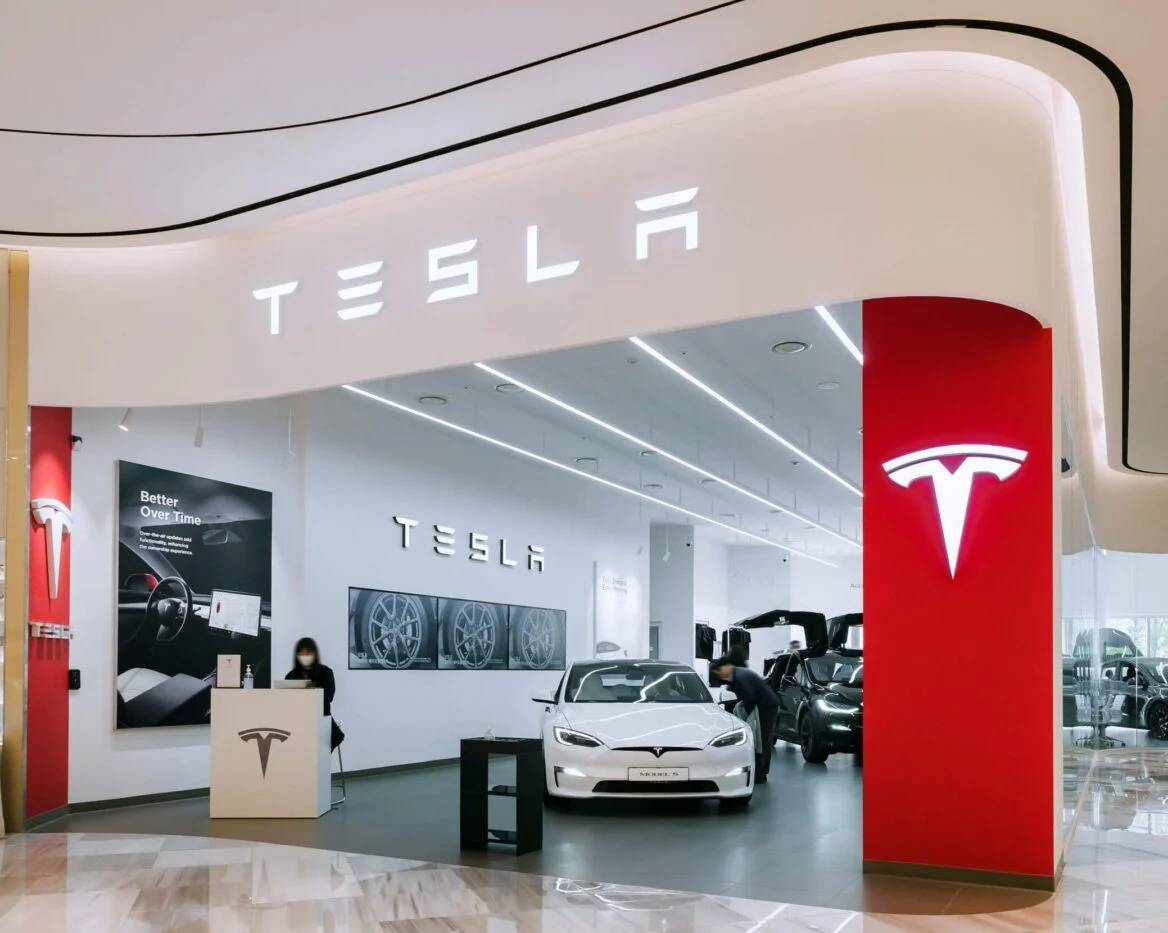
Tesla operates 35 retail locations and 14 service facilities across Japan currently. The expansion blueprint calls for scaling up to 60 stores minimum and approximately 30 service centres. This represents more than doubling the existing service capacity.
The retail strategy extends beyond simple geographic coverage. Tesla’s showrooms emphasize experiential test drives as conversion tools. Hashimoto explained that many reservations about transitioning from gasoline vehicles evaporate once potential customers experience electric vehicle operation firsthand. “Merely opening more stores doesn’t automatically drive purchases,” he noted.
Employee development has received particular attention. Approximately 70% of Tesla Japan’s sales consultants have held their positions for under six months. The company has implemented initiatives to shorten the timeframe between hiring and initial sales conversions.
This expansion arrives as Tesla confronts headwinds in established markets. Worldwide deliveries declined 8% throughout 2025, and first-quarter 2026 figures similarly disappointed analyst projections. Japan, where electric vehicle market share remains minimal, offers a growth avenue during a period of stagnation in core territories.
Japan’s Electric Vehicle Challenge
The fundamental obstacle is straightforward: Japanese buyers prefer hybrid powertrains. Automotive research firm JATO’s data indicates battery-electric vehicles have failed to achieve comparable adoption rates to hybrid technology across the country.
Japan’s new vehicle market totaled 4.56 million units in 2025, representing approximately 3% year-over-year growth. S&P Global forecasts continued modest expansion through 2026, supported by government infrastructure spending and environmental tax policies. However, the transition toward fully electric propulsion has progressed slowly regardless of manufacturer identity. Toyota, Nissan, Suzuki, and China’s BYD have all introduced electric models in Japan with underwhelming commercial performance.
Certain market observers identify fuel costs, influenced partially by Middle Eastern geopolitical instability, as a potential accelerant for electric vehicle adoption. Hashimoto highlighted that first-quarter 2026 Japanese sales reached roughly 50% of the complete 2025 annual figure — a metric suggesting building commercial traction, at minimum in the immediate term.
On Wall Street, TSLA carries a consensus Hold rating, based on 13 Buys, 11 Holds, and 7 Sells from 31 analysts over the past three months.
