


Key Takeaways
- Pudgy Penguins successfully launched physical products across 3,100 Walmart locations and Target stores, achieving mainstream retail distribution uncommon in cryptocurrency ventures.
- The parent entity Igloo secured $11 million in venture funding during 2024, with Founders Fund serving as lead investor.
- PENGU token documentation explicitly states the asset exists “for fun and entertainment only” without any “commercial value.”
- Total token supply caps at 88.89 billion units, with current market capitalization approximately $396 million and fully diluted valuation near $503 million.
- Combined insider and corporate token reserves account for 29.28% of total supply, with vesting schedules extending to 2028.
What began as a non-fungible token collection has evolved into one of cryptocurrency’s most recognizable consumer brands. Pudgy Penguins broke through traditional barriers when Igloo, its parent company, successfully negotiated placement in major brick-and-mortar retailers including Walmart and Target. This physical retail footprint represents an achievement few blockchain-based initiatives ever accomplish.
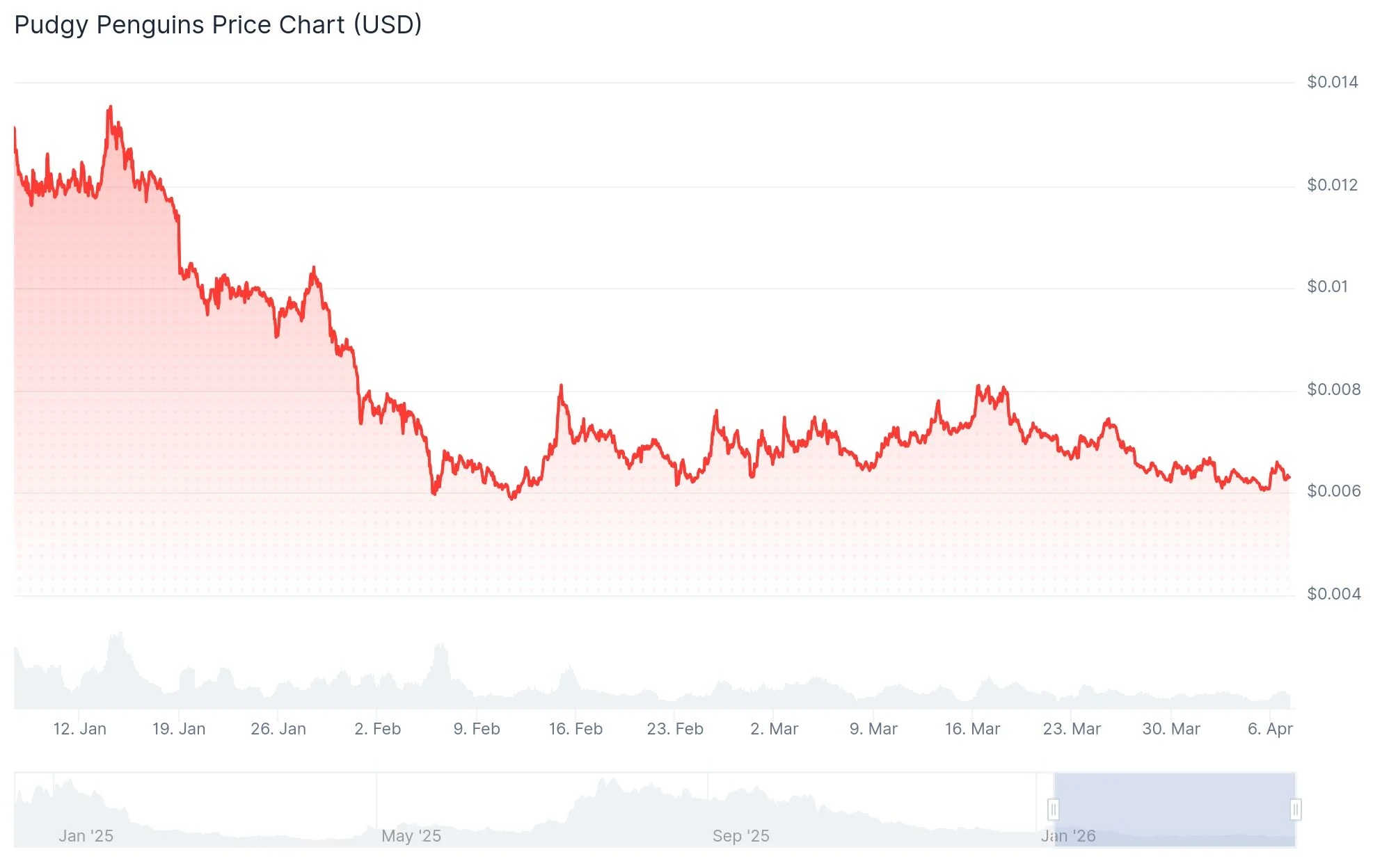
The physical product rollout stands as arguably the brand’s most significant validation. Pudgy Toys merchandise now occupies shelf space in 3,100 Walmart stores nationwide, delivering mass-market exposure that dwarfs what typical crypto ventures achieve.
Beyond retail partnerships, Igloo attracted serious venture capital attention, closing an $11 million funding round in 2024 with Founders Fund at the helm. This institutional investment signals confidence from traditional finance players who typically maintain distance from cryptocurrency projects.
Understanding PENGU’s Actual Utility
While the brand demonstrates clear market traction, the PENGU token operates under entirely different parameters. The official claim documentation explicitly categorizes PENGU as existing “for fun and entertainment only” while possessing “no commercial value.” This distinction carries significant weight.
Token ownership conveys zero entitlement to revenue streams from merchandise sales, brand licensing agreements, or any commercial activities Igloo undertakes. Rather than functioning as an investment vehicle, PENGU serves primarily as a community engagement and cultural participation mechanism.
Despite these limitations, PENGU maintains active secondary market trading. According to CoinGecko metrics, the maximum token supply reaches 88.89 billion units, with roughly 62.86 billion presently in circulation. Current market capitalization hovers around $396 million, while the fully diluted valuation approaches $503 million.
Token Distribution and Concentration Analysis
The allocation structure demands careful examination from anyone considering exposure. Tokenomist data reveals that 17.80% of total supply is earmarked for current and prospective team members, with an additional 11.48% designated for company reserves. This creates a combined insider and corporate position totaling 29.28% of all tokens.
Vesting schedules for these allocations extend through 2028. This timeline ensures continuous supply pressure as tokens unlock and potentially enter circulation over the coming years.
For an asset explicitly disclaiming utility connections to corporate revenue generation, this concentration level represents a material consideration in any investment thesis.
Meanwhile, the underlying brand continues expanding its footprint, maintaining retail shelf presence at two of America’s largest retailers while operating with institutional venture backing secured throughout 2024.
Concluding Assessment
Pudgy Penguins stands among the rare cryptocurrency-originated brands achieving legitimate physical retail penetration. The Walmart and Target distribution is substantial, and Founders Fund participation lends traditional finance credibility. However, the PENGU token presents a distinctly different proposition — lacking formal revenue participation rights, carrying substantial insider allocation weight, and bearing official documentation characterizing it as entertainment exclusively. Brand expansion may well continue, but that trajectory doesn’t necessarily translate to proportional token holder value appreciation.
