


Key Takeaways
- Major indexes tumbled following Trump’s primetime address, with the Dow dropping more than 600 points amid continued war uncertainty
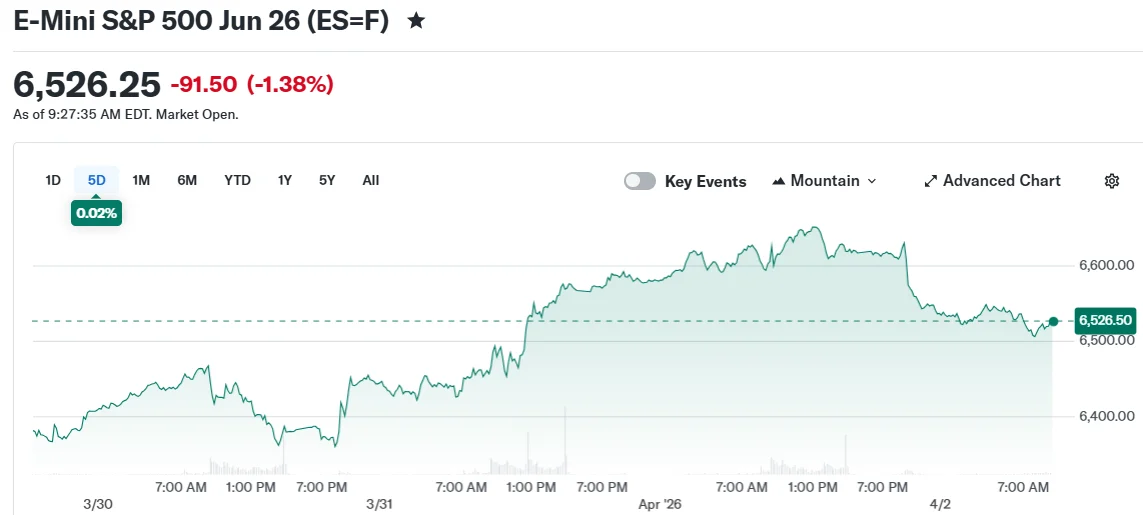
- Technology shares led losses, with the Nasdaq declining 1.7% and the S&P 500 down 1.2% during Thursday’s session
- WTI crude prices skyrocketed 13% beyond $113 per barrel, marking the steepest one-day climb in nearly five years
- Cryptocurrency markets and other high-risk investments retreated in tandem with equities
- Market volatility indicators surged to 27.66, signaling heightened concern among traders
Investors had anticipated that President Trump’s Wednesday evening national address would outline a definitive strategy for concluding the US-Israeli military engagement in Iran. Those expectations went unmet.
Equity markets experienced significant downward pressure Thursday morning as traders digested the President’s remarks. The Dow Jones Industrial Average plummeted over 600 points, representing approximately a 1.3% decline. Meanwhile, the S&P 500 retreated 1.2% and the Nasdaq Composite tumbled nearly 2%.
Energy commodities painted a starkly different picture. West Texas Intermediate crude skyrocketed 13%, pushing prices above the $113 per barrel threshold. This surge represents the most substantial single-session percentage increase since May 5, 2020. Brent crude climbed 8%, breaching $109 per barrel.
Brent crude has now appreciated approximately 50% since hostilities commenced in late February. A temporary price retreat earlier in the week had sparked cautious optimism among market participants, but Thursday’s presidential address swiftly extinguished that sentiment.
The President declared his intention to “hit Iran hard” and “send them back to the Stone Age.” He additionally indicated plans to intensify military operations before implementing a withdrawal within two to three weeks. Financial markets had been anticipating a more expeditious resolution.
JUST IN: 🇺🇸🇮🇷 President Trump says US is "going to hit" Iran "extremely hard over the next 2-3 weeks."
"We're going to bring them back to the stone ages." pic.twitter.com/FhV6VyBrCT
— BRICS News (@BRICSinfo) April 2, 2026
Paul Hickey, co-founder of Bespoke Investment Group, captured the market’s disappointment. “Leading up to last night’s address, there was some optimism that he would lay out a path of ending the hostilities,” he said. “We got neither.”
The Strait of Hormuz continues to serve as a critical focal point. This vital maritime corridor for international petroleum transport has remained under intense scrutiny since the conflict’s inception.
Technology Sector and Digital Assets Under Pressure
Semiconductor manufacturers bore the brunt of Thursday’s selloff. Nvidia and Broadcom shares declined substantially as the technology sector broadly retreated. Memory chip producers and other growth-oriented equities that had rallied Tuesday and Wednesday on de-escalation optimism surrendered those advances.
Bitcoin declined alongside other speculative investments. Digital currency markets have been responding to the same geopolitical tensions that have pressured stock indices for several weeks.
The CBOE Volatility Index, commonly referred to as the VIX, advanced 3.12 points to reach 27.66. This elevation indicates heightened apprehension and uncertainty among investors regarding near-term market conditions.
David Rosenberg of Rosenberg Research observed that Thursday’s downturn coincided with the one-year anniversary of President Trump’s “Liberation Day” tariff declarations, which similarly disrupted market stability.
“Hopes for a quick wind-down of the Iran war faded,” Rosenberg wrote. “Trump did not provide any off-ramp from the escalation path. Rhetoric has become harsher.”
Bond Yields Climb Amid Stagflation Concerns
Treasury yields advanced across the curve. The 2-year note yield increased to 3.83% while the 10-year yield ascended to 4.35%. Escalating petroleum prices have rekindled anxieties regarding stagflation—a scenario characterized by simultaneous inflation acceleration and economic growth deceleration.
Rosenberg noted that “worries about oil prices and stagflation are partly being balanced by lingering hopes that the war will not drag too far into the year.”
Thursday marked the final trading day of a holiday-abbreviated week. Markets remain shuttered on Good Friday. Investors will scrutinize the March employment report, scheduled for Friday release, seeking additional indicators regarding the US economy’s underlying strength.
Weekly unemployment claims figures published Thursday morning revealed an unanticipated decline, indicating labor market resilience persists despite the ongoing international conflict.
