

Key Highlights
- SPCE received a downgrade from “hold” to “sell” by Wall Street Zen on April 4, 2026
- Shares currently trade near $2.43, while analyst consensus suggests a $3.45 price target
- Ticket sales have resumed for the Delta Class spacecraft at $750,000 per passenger
- First-quarter earnings showed a loss of ($0.98) per share, surpassing expectations, though revenue of $0.31 million fell short
- Jefferies lowered its target from $8.00 to $5.00 while maintaining a “buy” stance, pointing to cash flow timing issues
Shares of Virgin Galactic (SPCE) started Friday’s session at $2.43, declining 1.4% during trading.
Virgin Galactic Holdings, Inc., SPCE
On April 4, 2026, Wall Street Zen shifted its position on SPCE from “hold” to “sell.” This adjustment reflects broader caution among analysts, as MarketBeat data shows a “Reduce” consensus rating alongside a mean price objective of $3.45.
Morgan Stanley maintains an “underweight” stance with a $2.30 price projection. Weiss Ratings similarly categorizes the stock as a “sell.” Among six tracked analysts, one recommends buying, three suggest holding, and two advise selling.
This week, Jefferies revised its price objective downward from $8.00 to $5.00, while preserving its “buy” recommendation. The firm cited cash flow timing challenges within the developing space industry as a key factor.
SPCE’s 52-week trading range spans $2.13 to $6.64. The stock’s 50-day moving average sits at $2.56, with the 200-day average at $3.25. With a beta of 2.20, the shares demonstrate significant volatility compared to broader market movements.
On March 30, Virgin Galactic released first-quarter results showing a loss of ($0.98) per share, outperforming the ($1.12) consensus forecast. However, revenue totaled just $0.31 million, missing the $0.41 million expectation.
Return on equity registers at negative 108.78%, while net margin stands at negative 18,063.93%. The company carries a debt-to-equity ratio of 1.87, though its current ratio of 2.87 indicates sufficient near-term liquidity.
Market capitalization currently hovers around $177 million. Wall Street projects a full-year loss of ($16.05) per share for the ongoing fiscal period.
Premium Pricing for Next-Generation Spacecraft
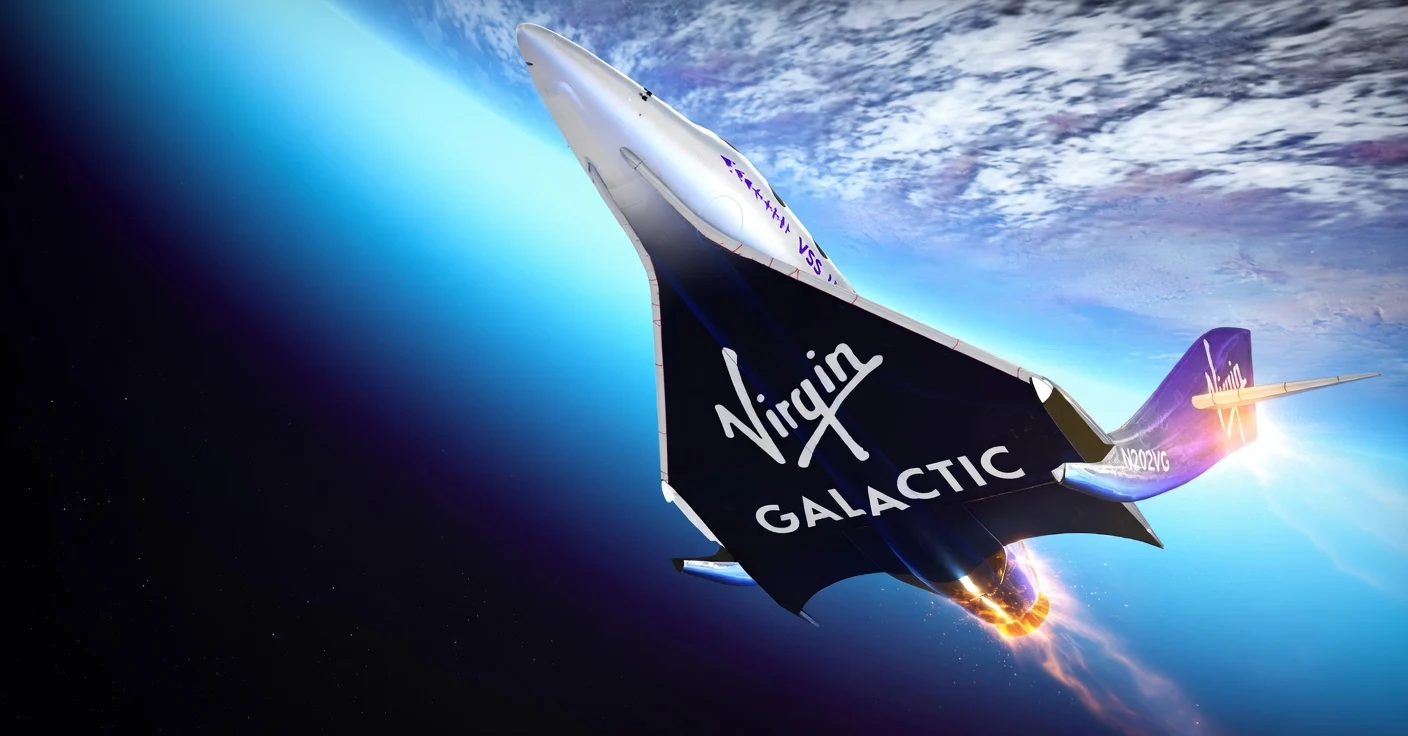
Coinciding with the analyst downgrades, Virgin Galactic opened reservations for its Delta Class spacecraft flights. The new ticket price stands at $750,000 per passenger — a notable increase from the $600,000 rate set in 2023.
The Delta Class features capacity for six passengers, representing a two-seat increase over the previous model. According to Virgin Galactic, testing will commence this summer, with commercial operations launching in the fall. The company plans to conduct research missions initially, followed by passenger flights six to eight weeks afterward.
An initial allocation of 50 tickets will be sold before Virgin Galactic temporarily halts sales. CEO Michael Colglazier indicated that future pricing rounds will feature higher rates, though specific amounts remain undisclosed.
Additionally, 675 “founding astronauts” who placed deposits years earlier remain in the queue and will fly at legacy pricing below current market rates.
Ambitious Monthly Flight Targets Ahead
Virgin Galactic’s most recent commercial mission, Galactic 07, took place on June 8, 2024. That flight marked the final journey for VSS Unity, the company’s inaugural spacecraft.
Colglazier has established an ambitious goal of 10 monthly flights by 2027, translating to approximately 60 passengers each month. Achieving this operational tempo will depend heavily on Delta Class performance during summer trials.
Institutional ownership accounts for 46.62% of SPCE shares. Multiple funds expanded their holdings in recent quarters, including Truist Financial Corp, which boosted its position by 78.2% during Q4.
Susquehanna established a $3.50 price target in January 2026.
