

Key Highlights
- Bitcoin declined to $70,900, marking a 2.5% decrease over 24 hours following Trump’s naval blockade announcement for the Strait of Hormuz
- Equity futures retreated on Monday, with Dow futures declining approximately 0.6%, S&P 500 futures sliding 0.7%, and Nasdaq futures dropping 0.8%
- Ceasefire negotiations between Washington and Tehran in Islamabad concluded over the weekend without reaching an agreement
- Crude oil prices skyrocketed, with WTI crude soaring more than 8% to surpass $104 per barrel
- First-quarter earnings season for major financial institutions begins this week, with Goldman Sachs reporting Monday
The leading cryptocurrency maintained levels above $73,000 throughout most of Saturday before experiencing a sharp selloff. The decline commenced after Vice President JD Vance announced late Saturday evening that ceasefire negotiations between the United States and Iran held in Pakistan had collapsed without resolution.
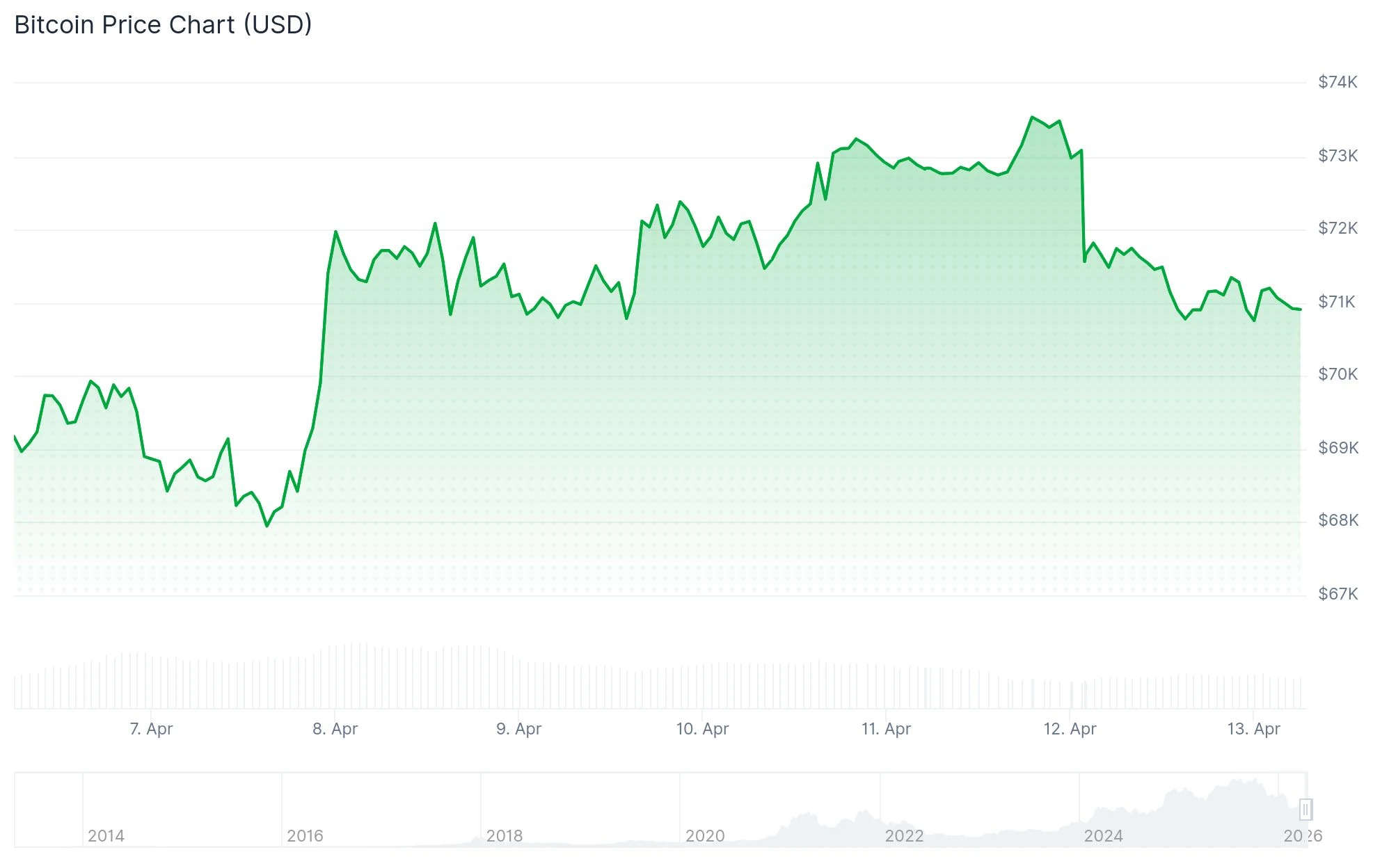
Subsequently, President Trump took to Truth Social on Sunday, declaring that the U.S. Navy would initiate operations “blockading any and all ships trying to enter, or leave, the Strait of Hormuz.” Following this pronouncement, Bitcoin experienced additional losses, declining to $70,900.
BREAKING: President Trump is looking at resuming "limited military strikes" in Iran in addition to the US blockade of the Strait of Hormuz, per WSJ.
Details include:
1. Trump could also resume a full-fledged bombing campaign, though officials said that was less likely
2. Trump…
— The Kobeissi Letter (@KobeissiLetter) April 12, 2026
Bitcoin has registered a 2.5% decline over the last 24-hour period.
Tehran had previously been implementing restrictions on maritime passage through the strait following American airstrikes conducted at the conclusion of February. The U.S. blockade declaration represents a significant intensification of regional tensions.
Equity index futures declined during Monday morning trading in reaction to the geopolitical developments. Dow Jones futures contracted by approximately 0.6%, suggesting an opening decline exceeding 580 points. S&P 500 futures retreated 0.7% while Nasdaq 100 futures shed 0.8%.
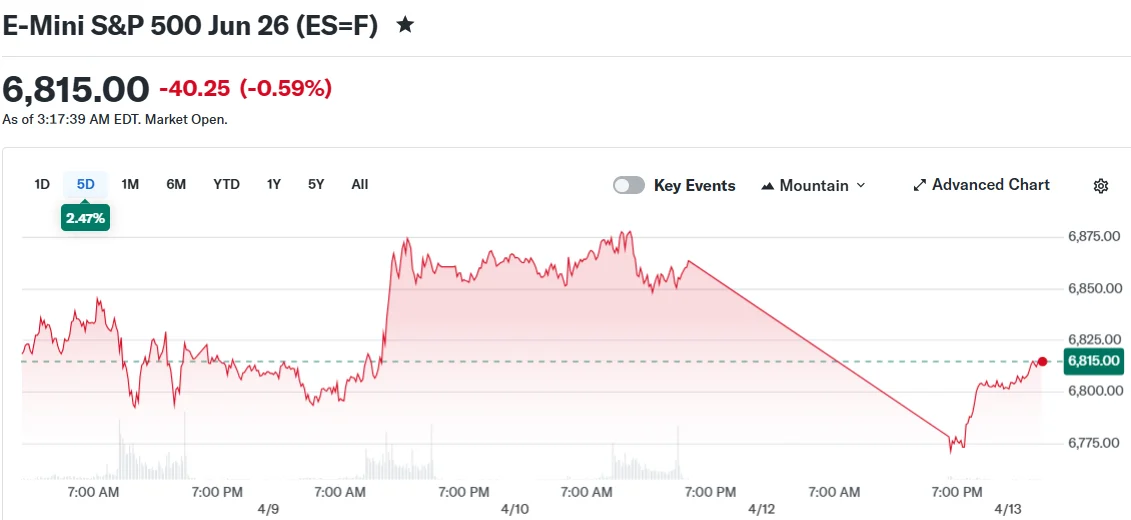
These losses come after a robust week for equity markets. During the previous week, optimism surrounding a potential temporary ceasefire had driven markets significantly higher. The S&P 500 advanced approximately 3.6%, the Nasdaq climbed nearly 4.7%, and the Dow increased 3%. These gains represented the strongest weekly performance since November.
Crude Oil Markets Surge on Blockade Announcement
Oil markets demonstrated dramatic responses to the news. West Texas Intermediate crude jumped more than 8% to levels exceeding $104 per barrel. Brent crude increased 7.5%. The Strait of Hormuz represents one of the globe’s most critical maritime corridors for petroleum transportation.
The Islamabad negotiations reportedly failed over issues extending beyond ceasefire terms. Additional contentious points included requirements concerning strait control, financial compensation packages, and cessation of Israeli military operations in Lebanon.
Both parties departed without securing an agreement. Vice President Vance participated among the American delegation representatives.
Financial Sector Earnings Reports Commence
Market participants will also be monitoring the beginning of first-quarter earnings reporting season throughout this week. Goldman Sachs leads the schedule with Monday’s release.
Bank of America, Wells Fargo, Citigroup, JPMorgan Chase, and Morgan Stanley are scheduled to publish their quarterly results during subsequent trading days.
Investor focus will be divided between monitoring geopolitical developments and analyzing major banking institutions’ economic assessments and performance metrics.
As of Sunday evening, Bitcoin was trading near the $70,900 level. Stock index futures continued indicating a lower market open for Monday’s session.
