


Key Highlights
- BTC hovers near $66,600 as Good Friday trading halts impact CME futures and ETF activity
- Net Bitcoin demand slipped to -63,000 BTC despite strong ETF and corporate accumulation reaching multi-month peaks
- Whale wallets holding 1,000–10,000 BTC have shifted to distribution mode, declining approximately 188,000 BTC from highs
- Major U.S. equity indices broke their five-week decline, with both S&P 500 and Nasdaq finishing marginally positive
- WTI crude oil posted an unprecedented 11% rally to $111.54, marking its biggest single-session dollar increase since 1983
As the Easter holiday weekend approaches, Bitcoin finds itself on shaky ground while U.S. equity markets managed to eke out modest gains after an extended downturn.
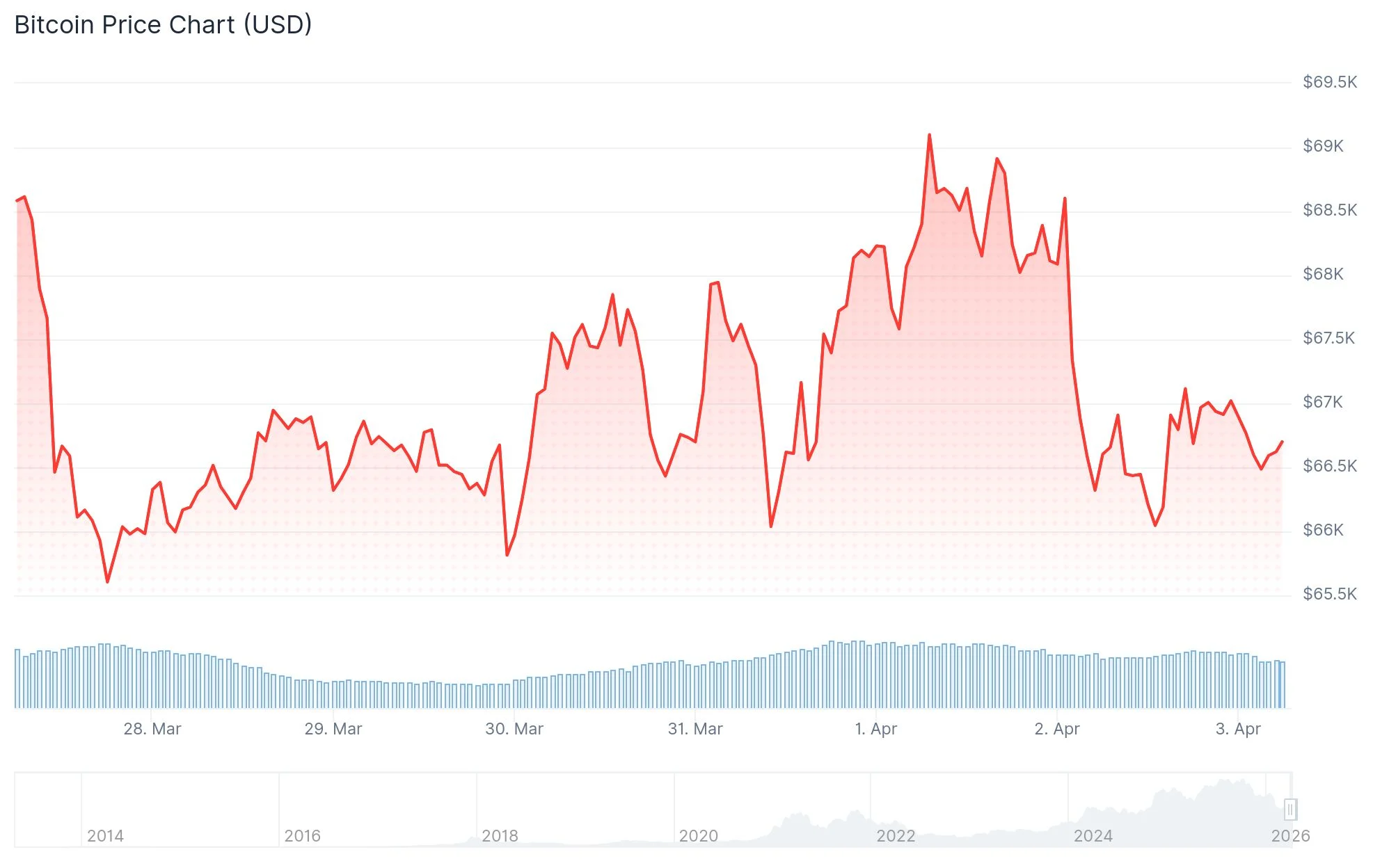
BTC was hovering near $66,600 on Thursday as Good Friday market closures shut down CME futures and ETF trading activity. The pause eliminates two critical demand drivers precisely when buying momentum has already weakened considerably.
According to CryptoQuant metrics, 30-day net demand has fallen to approximately -63,000 BTC. This negative reading persists despite ETF accumulation reaching roughly 50,000 BTC during the past month—the strongest level observed since October 2025.
Corporate buyer Strategy contributed approximately 44,000 BTC during this same timeframe. However, distribution from other market participants proved substantial enough to counterbalance these institutional purchases.
Whale Wallets Shift to Distribution Phase
The most pronounced selling pressure originates from major holders. Wallets containing 1,000 to 10,000 BTC have transitioned into net distribution mode. Their annual balance adjustment has declined to roughly -188,000 BTC, a sharp reversal from the positive 200,000 BTC position seen during the 2024 cycle top.
Medium-tier accumulation has similarly cooled. The Coinbase Premium indicator remains in negative territory, typically signaling diminished appetite from American spot market participants.
The market is currently being led by Binance and OKX.
This is also clearly shows in the $BTC Coinbase premium. Currently, the Coinbase premium is negative.
Buying pressure from US investors is smaller compared to Binance. https://t.co/RJS7IngveH pic.twitter.com/bQjvFFJt7I
— CW (@CW8900) April 1, 2026
Singapore-based trading firm Enflux informed CoinDesk that Bitcoin’s support level maintains connections to Federal Reserve rate cut expectations. This foundational support currently faces significant testing.
The ISM prices-paid metric climbed to 78.3 for March, reaching its highest point since June 2022. Such elevated readings reduce the probability of imminent rate reductions, applying downward pressure on Bitcoin’s macro-influenced price support.
ETF movement patterns already mirror this transition. During the week ending March 24, net ETF outflows totaled $296 million. April’s inflows have remained subdued.
CryptoQuant identified a resistance band spanning $71,500 to $81,200 for any potential upward price movement. The upcoming critical data release is U.S. core PCE inflation figures scheduled for April 9.
Equity Markets and Energy Sector
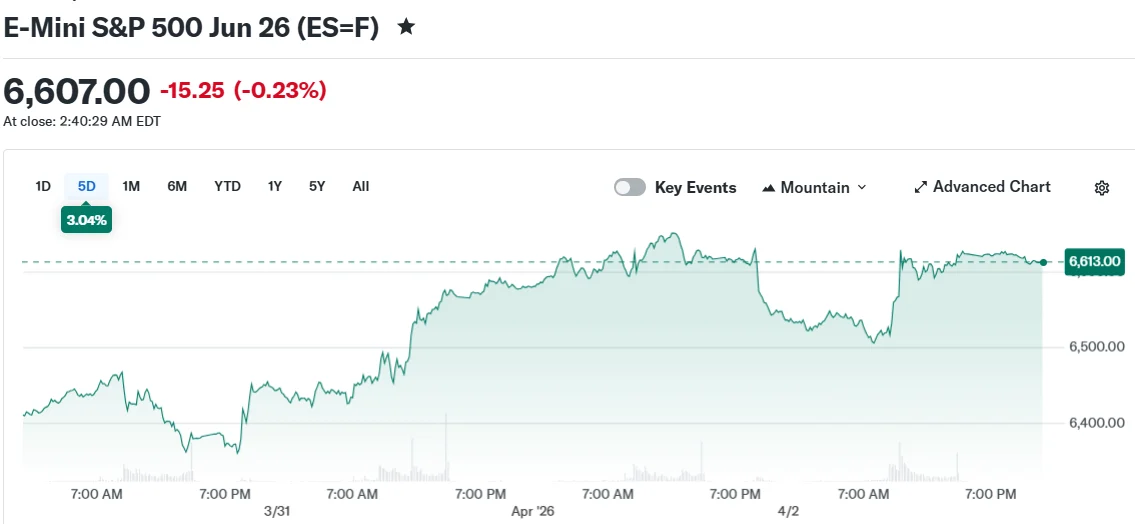
U.S. stock indices concluded the week positively despite Thursday’s challenging session. The Dow Jones Industrial Average declined 61 points during Thursday trading, yet all three primary benchmarks finished the week higher, ending their five-week consecutive decline.
The trading day was characterized by extraordinary movement in crude oil markets. West Texas Intermediate crude closed at $111.54, climbing 11% during the session. The $11.42 dollar increase represents the largest single-day advance in WTI records extending back to 1983.
The dramatic surge followed President Trump’s remarks regarding Iranian conflict developments, which provided limited new information about potential resolution of Strait of Hormuz restrictions.
J.P. Morgan analyst Fabio Bassi projected oil prices will maintain elevated levels throughout Q2. He identified near-term risk within the $120–$130 per barrel range, with potential for prices exceeding $150 if Strait complications persist beyond mid-May.
Market participants will also focus on the March employment report, releasing Friday despite equity market holiday closures. Analysts anticipate hiring acceleration following February’s weather- and labor action-impacted results.
