


TLDR
- National fuel costs in the United States surpassed $4 per gallon this week, reaching $4.018—the first time since August 2022.
- Oil benchmarks have climbed approximately 50% in the last month due to escalating U.S.-Iran military tensions.
- Administrative emergency measures including ethanol and Jones Act waivers have failed to lower consumer fuel costs.
- Diesel prices reached $5.45 per gallon, setting another monthly record increase.
- Goldman Sachs elevated its Brent projection to $115 for April, while some market experts suggest prices could reach $200 if hostilities extend into June.
American motorists reached a significant price threshold this Tuesday as fuel costs climbed above $4 per gallon nationwide for the first time in nearly three years. The national average settled at $4.018 per gallon, representing the steepest monthly increase ever recorded, based on tracking data from GasBuddy.
This dramatic escalation stems directly from the continuing military confrontation between the United States and Iran, now entering its fifth week. Throughout the past thirty days, both Brent crude and West Texas Intermediate benchmarks have jumped approximately 50%, with Brent hovering around $107.80 per barrel and WTI trading near $102 per barrel.
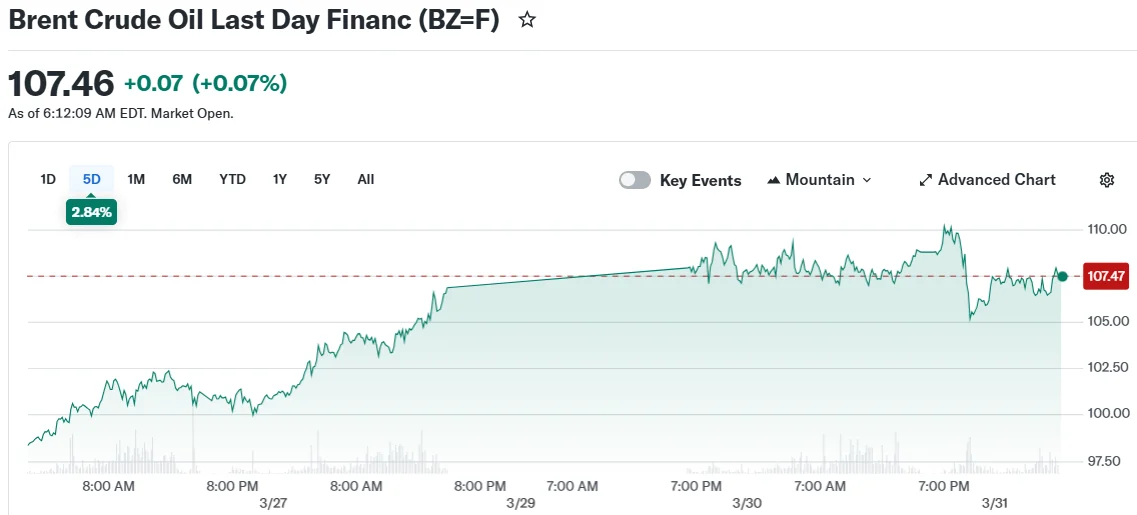
Compared to this time last year, drivers are paying roughly $1 more per gallon at the pump. The overwhelming majority of this increase occurred after military operations commenced.
The commercial transportation sector faces even steeper costs. Diesel fuel reached a national average of $5.45 per gallon on Tuesday—likewise establishing a record for the largest monthly price surge, according to GasBuddy data.
GAS PRICES SURGE PAST $4 AMID WAR
US gasoline has topped $4 per gallon for the first time since 2022, rising over $1 in a month as the Iran war disrupts global oil supply. Crude prices have climbed above $100, pushing fuel costs sharply higher worldwide.
The spike is fueling…
— *Walter Bloomberg (@DeItaone) March 31, 2026
In response to escalating costs, the Trump administration enacted emergency relief measures on March 25, loosening federal regulations on E15 gasoline ethanol content to make cheaper fuel blends available. Additionally, the White House suspended Jones Act maritime shipping restrictions for 60 days to reduce domestic transportation expenses.
Despite these interventions, consumer prices at service stations have shown no meaningful decline.
The Strait of Hormuz Problem
Even with a potential near-term resolution to hostilities, oil prices are unlikely to retreat rapidly. The critical bottleneck centers on the Strait of Hormuz, a maritime chokepoint that previously facilitated approximately 20% of worldwide oil and natural gas shipments.
According to a Wall Street Journal account citing senior administration sources, President Trump has indicated readiness to scale back military operations regardless of whether the Strait reopens. While this strategic waterway remains effectively closed, petroleum prices are expected to stay in triple-digit territory.
The consequences are already manifesting across Asia. Since Asian refineries received the bulk of crude oil transiting through the Strait, countries throughout the region are implementing emergency conservation measures. Bangladesh has temporarily closed universities, while Pakistan and the Philippines have instituted abbreviated workweeks to manage energy consumption.
Defense Secretary Pete Hegseth and Chairman of the Joint Chiefs of Staff Gen. Dan Caine were scheduled to hold a press conference Tuesday at 8 a.m. Eastern time.
What Analysts Are Saying
Goldman Sachs has revised its April Brent crude forecast upward from $85 to $115 per barrel, attributing the adjustment to prolonged supply disruptions and elevated risk premiums associated with Strait of Hormuz uncertainties. High-ranking Saudi Arabian officials have internally modeled scenarios placing Brent at $180 should the conflict persist through April. Macquarie analysts have projected that Brent could exceed $200 per barrel if military engagement continues into June.
Premium gasoline grades and aviation fuel are experiencing parallel price escalations. While consumer pain at the pump is substantial, it remains less severe than the cost burden currently affecting commercial diesel operators.
Brent crude futures were last quoted near $107.61, showing modest gains for the trading session.
