Apple’s Shifting Playbook: The Push for Ultra, the iPhone 18 Pro, and the Legacy of Pro Design
Apple is actively reshaping its hardware lineup, stretching its catalog across a much wider price spectrum. We recently saw the introduction of the MacBook Neo, a budget-friendly laptop starting at just €699. Powered by the A18 Pro chip lifted straight from the iPhone, the Neo undercuts the standard MacBook Air by a massive €500. This is a stark contrast to the iPhone side of the house, where the gap between the iPhone 17e and the base iPhone 17 sits at a mere €250. However, the Neo is just a supplementary piece of a much larger puzzle. Apple’s real momentum is aggressively heading upmarket.
The Dawn of the Ultra Era
While the company toys with entry-level Macs, multiple upcoming product launches are squarely aimed at establishing a new, ultra-premium tier. This strategy is most obvious in the highly anticipated foldable iPhone. According to Bloomberg, internal blueprints outline a device boasting a massive internal display and next-generation sensor arrays. Unsurprisingly, this hardware won’t come cheap, with projected pricing floating around the €2,300 mark.
Apple executives clearly see a hungry market for a class of devices sitting well above the current Pro Max ceiling. It is highly likely we will see the “Ultra” branding—a moniker already assigned to the rugged Apple Watch and specific silicon variants—applied to this new flagship tier. The Ultra label probably won’t stop with phones. We could soon see it attached to upcoming OLED MacBooks or even next-generation AirPods equipped with built-in cameras designed to power visual AI assistant features. Apple isn’t necessarily inventing entirely new product categories right now. They are taking their existing ecosystem and spreading it across more extreme performance and pricing tiers.
What to Expect from the iPhone 18 Pro
Before any foldable Ultra models hit the shelves, the immediate spotlight belongs to the iPhone 18 Pro and Pro Max, expected to launch this September. A base iPhone 18 model will potentially follow later in the spring of 2027. The rumor mill is already painting a vivid picture of the fall lineup. Rather than drastically overhauling the design language of the iPhone 17 Pro, Apple has seemingly prepared just enough targeted upgrades to make the new models highly compelling.
The Dynamic Island is sticking around, but it is reportedly going on a diet. Apple engineers have finally managed to tuck crucial Face ID components beneath the display panel, resulting in a noticeably smaller screen cutout. Photography enthusiasts also have a major reason to pay attention. The main camera on the iPhone 18 Pro models is rumored to inherit a true DSLR-style variable aperture. This mechanism physically adjusts the amount of light hitting the sensor based on environmental conditions, giving users granular, hardware-level control over depth of field.
Under the hood, these devices will be powered by the A20 Pro. Fabricated on a groundbreaking 2nm process for the very first time, this silicon promises massive leaps in both raw speed and battery efficiency. Connectivity is getting a major boost across the board as well. The A20 Pro will house the new N2 networking chip, delivering significantly better Wi-Fi performance and power management than the N1 introduced in the iPhone 17 series. Furthermore, the Pro models will feature Apple’s proprietary C2 cellular modem. Unlike the C1 in the iPhone 16e or the C1X in the iPhone Air, the new C2 modem finally brings support for blazing-fast mmWave 5G networks.
The Enduring Appeal of the Pro Aesthetic
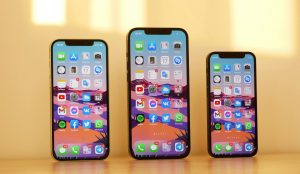
You don’t have to look to the future to see where Apple’s obsession with premium hardware started. It’s easy to get caught up in rumors of 2nm chips and multi-thousand-euro foldables, but older flagships perfectly illustrate the staying power of the “Pro” designation. Take the 2020 iPhone 12 Pro and Pro Max. Even noted as being highly capable daily drivers well into 2023, they still pack incredible utility today thanks to reliable 5G connectivity, the robust A14 Bionic chip, and HDR Dolby Vision video recording.
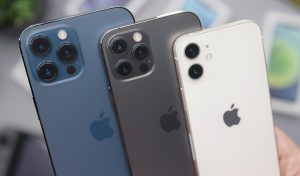
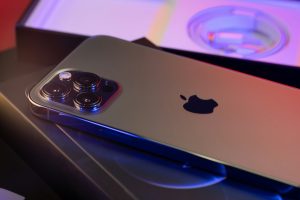
Much of that lasting value comes directly from their industrial design and the official colorways Apple developed: Gold, Pacific Blue, Silver, and Graphite. The Gold model makes an unapologetic statement. Apple utilized a high-power magnetron coating process on the stainless steel frame to achieve a brilliant, bright gold finish that can look almost pearlescent in direct sunlight. This glossy frame contrasts beautifully with the textured matte glass back, making the phone feel exceptionally expensive.
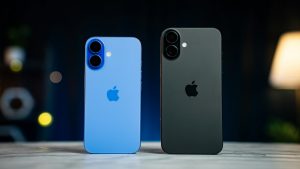
Pacific Blue, a brand-new shade for the lineup at the time, offered a distinctly mature alternative to the standard iPhone 12’s brighter blue. The matte finish easily brushed off fingerprints, while the color-matched camera bump and Apple logo tied the whole stylish package together. For buyers wanting subtle sophistication, the Silver variant offered total elegance. Presenting as nearly white in most lighting, its minimalist aesthetic was framed by a glossy, contrasting silver edge. Finally, Graphite offered a sleek, stealthy option. While virtually identical to the Space Grey of the older iPhone 11 Pro Max, the sharp, flat edges introduced with the iPhone 12 series completely transformed the plain color into something deeply sophisticated.